
Augmented reality and virtual reality XR trends 2026
Advertisements
The ecosystem of Augmented reality and XR virtual reality It is undergoing an unprecedented transformation this year, driven by accelerated neural processing chips and ultra-high-density micro-LED displays.
What are augmented reality and XR virtual reality in the current scenario?
The concept of Spatial Computing has expanded dramatically, unifying different digital spectrums under the acronym that represents Extended Reality at its maximum technical and market maturity.
This infrastructure allows for the overlaying of complex three-dimensional holographic elements onto the physical environment or for completely isolating the user's sensory perception in digital worlds rendered in real time.
Thanks to advances in eye and hand tracking sensors, devices have made traditional physical controls unnecessary in most everyday corporate interactions.
Advertisements
The industry has abandoned uncomfortable prototypes to focus on ergonomic and lightweight designs, allowing for extended periods of use in engineering offices, medicine, and modern industrial design.
This evolution redefines the parameters of digital immersion, consolidating space devices not only as entertainment accessories, but as indispensable corporate tools for daily productivity.
How is the corporate market absorbing these immersive technologies?
Global corporations are using space platforms to reduce operational logistical costs of specialized technical training and to accelerate the development cycles of complex industrial prototypes.
Engineers are able to manipulate digital representations of aircraft engines or entire architectural blueprints before the first physical part is manufactured on the assembly line.
The expansion of Augmented reality and XR virtual reality It optimizes the sharing of specialized knowledge between geographically dispersed teams through realistic holographic meeting rooms.
This method drastically reduces the need for international technical audit travel, mitigating the operational carbon footprint of large multinational technology corporations.
What are the main technical specifications of the market-leading eyewear?
The competition for dominance in the spatial computing market has intensified with the arrival of extremely high-resolution displays and ultra-low-latency pass-through sensors.
Consumers now demand high refresh rates to mitigate the visual sickness effects common in early generations of full-immersion goggles.
To understand the competitive landscape of high-end devices available in stores, analyze the consolidated technical data in the information table below:
| Space Device | Screen Type Used | Native Eye Resolution | Maximum Refresh Rate |
| Apple Vision Pro | High-density micro-OLED. | 4K (approximately 23 million total pixels). | 100 Hz dynamic. |
| Meta Quest 3S | Fast response LCD. | 1832 x 1920 structural pixels. | Selectable 120 Hz. |
| HTC Vive XR Elite | LCD with pancake lenses. | 1920 x 1920 pixels per channel. | Stable 90 Hz. |
According to technical data published by the developer community on the portal Qualcomm Developer Network, The new mobile chipsets enable this heavy graphics processing without overheating the facial structures of the devices.
Why has artificial intelligence become the driving force behind space computing?
Generative artificial intelligence algorithms are used to render responsive three-dimensional scenarios in real time, mapping the exact geometry of the rooms where the user is positioned.
Learn more: Autonomous artificial intelligence: a technology that will dominate in 2026.
This fusion allows virtual objects to physically interact with real furniture, respecting basic laws of physics such as collision and the projection of natural textured shadows.

The consolidation of Augmented reality and XR virtual reality It depends directly on this intelligent processing capability to interpret contextual voice commands and the operator's eye contact.
Without modern machine learning models, it would be impossible to process the immense flow of data generated simultaneously by external cameras for continuous positional tracking.
Which productive sectors are registering the greatest growth in practical adoption?
Surgical medicine leads the statistics for practical implementation by using holographic projections of CT scans directly onto patients' bodies during highly complex procedures.
This millimeter-precise visual mapping enhances the safety of the surgical procedure, reducing the total length of hospital stay and the inherent risks of subsequent surgical infections.
Read more: Augmented reality in retail: how to transform the shopping experience.
In the technical education sector, immersive simulators enable electrical network students to handle high-voltage substations without any real physical risk of fatal electrocution accidents.
This pedagogical methodology increases the retention of practical learning by up to four times when compared to traditional methods based exclusively on printed theoretical textbooks.
What can we expect from the evolution of this infrastructure in the coming months?
Technical advancements point towards a drastic reduction in external batteries and the emergence of designs similar to conventional eyeglasses for continuous use on the streets.
Advanced fifth-generation connectivity ensures a seamless flow of data to the cloud, enabling remote processing of complex graphics without overloading the user's wearable hardware.
Learn more: Virtual Reality vs. Augmented Reality: What's the Difference and How to Use Them?
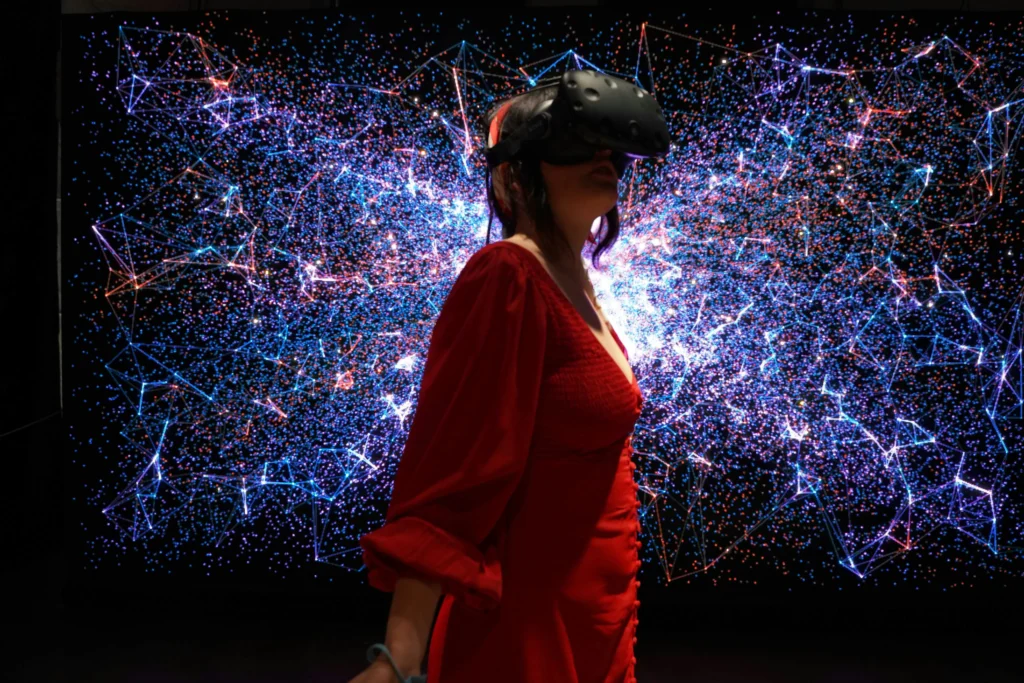
The consolidation of Augmented reality and XR virtual reality This will transform e-commerce, allowing consumers to virtually try on perfectly fitting clothes using their own digital avatars.
To access detailed economic reports on the financial trends governing this immersive global market, visit the official website of the international analytical consultancy. Gartner, a leader in corporate strategic insights.
Adapting to this new computing interface represents the definitive step for companies seeking to lead the vanguard of contemporary digital transformation in the coming years.
Frequently Asked Questions (FAQ)
What is the main difference between augmented reality and virtual reality in the XR ecosystem?
Augmented reality overlays digital elements onto the visible physical world, while virtual reality isolates the user in a completely digital environment through opaque screens.
Do modern space computing glasses cause the thermal discomfort of past generations?
No, current devices utilize internal silent active ventilation channels and aerospace-grade aluminum alloys that dissipate the heat generated by the processors away from the face.
Is it possible to use fully immersive smart glasses with regular corrective lenses?
Yes, leading manufacturers offer high-precision, custom-designed magnetic optical inserts that attach internally to device displays, eliminating the need for traditional over-the-glasses eyewear.
How does the fifth-generation mobile network influence the performance of portable XR devices?
The ultra-high-speed mobile network reduces data transmission latency to less than five milliseconds, enabling the rendering of complex graphics directly on cloud servers.
