
What comes after 5G? An analysis of 6G, connectivity, and the future of networks
Advertisements
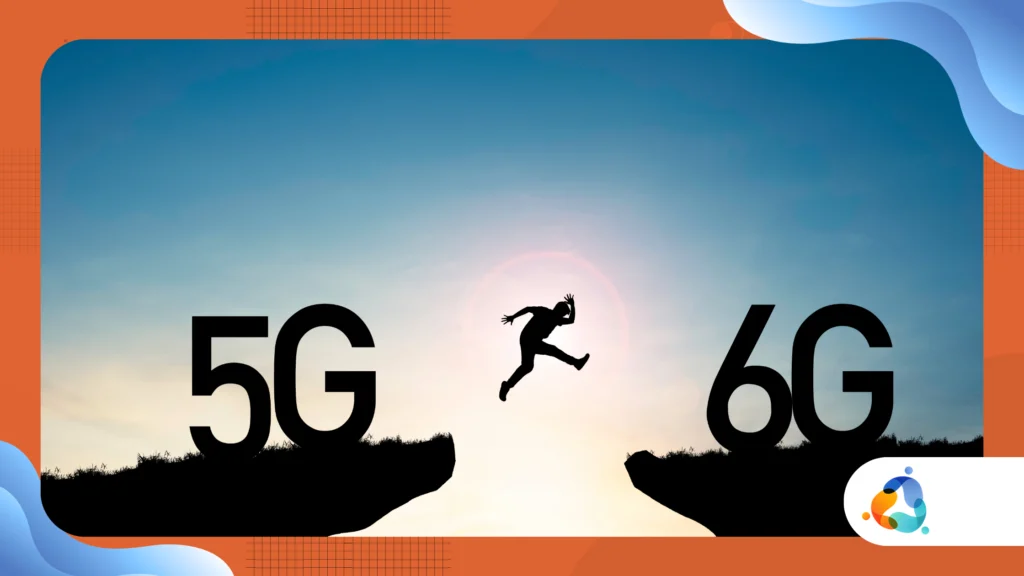
What comes after 5G? It is no longer a matter of science fiction, but a reality taking shape in the most advanced research laboratories on the planet.
While 5G continues to expand its global reach and transform industries, connectivity architects are already outlining the contours of the next frontier.
The sixth generation of mobile networks, 6G, promises to be more than just an increase in speed. It represents a revolution in how we interact with the digital environment.
The future of the internet will be built on pillars of intelligence and ubiquity, redefining the concept of real time.
How does the evolution of 5G pave the way for the next generation?
5G has laid the foundation for the massive Internet of Things (IoT).
Its low latency and greater capacity have brought remarkable advances. However, it is the stepping stone, not the final destination, of connectivity.
Advertisements
5G-Advanced, or 5.5G, already serves as a smart transition. It enhances performance for critical applications and prepares existing infrastructure.
This gradual evolution is crucial for efficient migration. Without this bridge, the technological leap would be economically unfeasible.
With each new generation, the network becomes smarter and more adaptable. The path to 6G is paved by the continuous optimization of 5G.
++ Google Pixel 10 Pro XL versus iPhone 17 Pro Max
What are the essential characteristics that distinguish 6G?
The essence of 6G lies in its processing power and speed. The peak speed target is, in some projections, a hundred times greater than 5G.
We're talking about transmission rates in the Terahertz (THz) range. This ultra-high frequency is at the heart of its extreme capability.
Ultra-low latency will be virtually instantaneous. One of the cornerstones will be intrinsic integration with Artificial Intelligence (AI).
The 6G network will be predictive and will optimize its own data traffic. It will self-manage with unprecedented efficiency.
How will the integration of Artificial Intelligence and 6G create a sensory world?
AI will not just be an application on top of the 6G network. It will be an integral part of its architecture. This will allow the creation of an Internet of Senses (IoS).
++ How to use technology to benefit your mental health
The Internet of Things (IoS) aims to digitize sensory experiences.
The merging of connectivity with machine perception is the next leap. Imagine a doctor, through a tactile hologram, performing remote surgery.
What comes after 5G? It is the ability to touch, feel, and interact with the digital world.
- A factory in the Amazon is controlled by an engineer in Berlin. He feels, through haptic gloves, the torque of an assembly robot.
- 6G ensures that feedback The tactile feedback should be instantaneous, preventing real-time failures.
Why is ubiquitous connectivity the central goal of 6G?
6G will seek widespread and truly global connectivity. The network will not be limited to ground-based towers, as it is today. It will be an integrated ecosystem with low-Earth orbit (LEO) satellites.
++ How ChatGPT and Gemini are changing personal and professional productivity
This universal network will guarantee high-speed access anywhere. Rural areas, oceans, and even space will have coverage. 6G is the promise of radical digital inclusion.
5G is an express highway that connects major cities. 6G, on the other hand, is a teleportation system. It connects all points on the map instantly and without detours.
When will 6G become a commercial and global reality?
It's 2025, and the international standardization of 6G is beginning. Development is progressing rapidly in several nations.
China, the European Union, and the US are investing heavily in research. According to Juniper Research, commercial launches in key markets are projected to occur around [date/time]. 2029.
++ What comes after 5G? Meet 6G, the 'internet of the senses'.‘
Juniper Research projects that the 6G network will have approximately 290 million global connections by 2030. The industrialization verification phase should begin in 2028.
| 6G Development Stage (Projection) | Period (Approx.) |
| Conceptual Research and Prototypes | 2020 – 2025 |
| Standardization and Technical Specifications | 2025 – 2028 |
| Commercial Testing and Pilot Implementation | 2028 – 2030 |
| Commercial Launch in Key Markets | 2029 – 2030 |
Which sectors will be most impacted by the 6G technological leap?
Industries will be redefined by the arrival of 6G. Healthcare, for example, will see telemedicine elevated to a new level.
Transportation will be fully autonomous, with cars communicating in fractions of a second. Industry 4.0 will evolve into 5.0, with advanced robotic automation.
- A metropolis's traffic system communicates with every autonomous vehicle. The 6G network processes the location of millions of cars and pedestrians. It optimizes traffic flow in real time, eliminating congestion in seconds.
What comes after 5G?High-Value Connectivity and Inclusion
The transition will require robust investments in new infrastructure. Harmonizing frequencies and global standards will be a challenge.
The cost of the new devices will also be an initial factor. However, the potential is immense. What comes after 5G? It's a more integrated and responsive digital society.
6G represents the promise of an unprecedented digital experience.
Brazil is also making moves, with regulatory discussions and planning for the frequency auction. The expectation is that the country will soon ride this wave.
Digital inclusion and regional development will be boosted. The new generation is not just about... gigabytes per second, but about the value that this data generates.
6G will be a force for social transformation.
What is the true potential of 6G for social transformation?
6G has the potential to significantly boost the global economy. It will create new business models and high-tech job opportunities.
More than that, it must democratize access to information and services. Distance education and remote healthcare will gain unparalleled quality.
Could 6G be the key to unlocking an unprecedented level of prosperity and knowledge? What comes after 5G? It's a chance to rewrite the rules of communication.
This is a crucial moment, where today's research shapes tomorrow's daily life. The evolution of networks is a virtuous cycle.
Conclusion: The Connected and Intelligent Tomorrow
The arrival of 6G is less than a decade away. It will not be a mere repetition of previous generations.
It will be a network that thinks, feels, and adapts to its environment. The focus is not just on speed, but on intelligence and ubiquity.
What comes after 5G? It's a completely new human experience, mediated by near-instantaneous data. The future of connectivity is being written now, and it's fast, intelligent, and comprehensive.
Frequently Asked Questions
Will 6G completely replace 5G immediately?
No. 6G is designed to be backward compatible and will coexist with 5G, at least initially.
5G will continue to be the backbone of many applications, while 6G will be gradually introduced for more demanding and cutting-edge applications.
What frequencies should 6G use?
6G will explore ultra-high frequency bands, such as the Terahertz (THz) band, which offers much greater bandwidth for transmitting gigantic volumes of data, surpassing the limitations of the microwave and millimeter wave frequencies of 5G.
What are the main technical challenges for the implementation of 6G?
The challenges include the development of hardware Compatible for operation at THz frequencies.
There is also a need to harmonize global standards and ensure that the new infrastructure is energy efficient.
Will 6G be available in Brazil at the same time as in developed countries?
Although the timeline depends on factors such as frequency auctions and infrastructure investments, Brazil has been moving quickly.
According to Anatel, the expectation of an auction in 2026 suggests that the country will seek to follow the global implementation window projected for 2029-2030.
Will 6G only benefit users with advanced technology?
No. Although the initial applications are complex, the main goal is pervasive connectivity.
This means that 6G will benefit sectors such as health and education in remote areas, promoting greater digital and social inclusion.
