
Multimodal AI in 2026: How this technology is transforming everything.
Advertisements
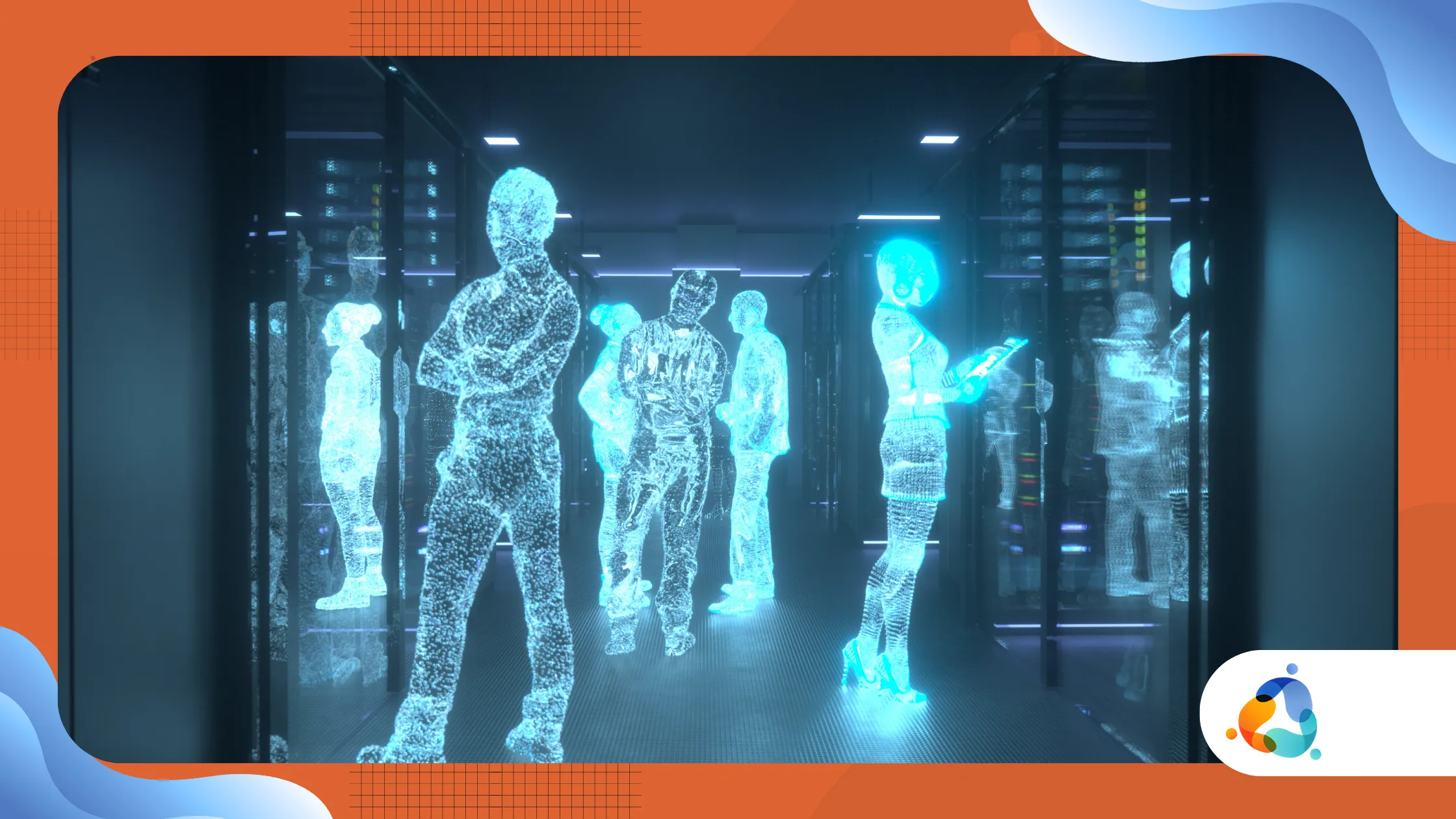
THE Multimodal AI in 2026 It has gone from being a technical promise to becoming the central nervous system of our digital economy.
What once seemed like a data integration trick is now a unified perception: the machine has finally begun to process the world as we do, merging text, vision, and sound into an impressive situational awareness.
Unlike the rigid interactions of just a few years ago, contemporary systems don't just read what we write.
They feel the weight of our voice and interpret the background scenery of a video call.
This paradigm shift has moved technology from the realm of a "consultation tool" to the realm of "cognitive collaboration.".
In this article, we will dissect how this infrastructure is rewriting the rules of the game, from surgical precision to the factory floor, without the naive optimism of the past, but with the realism that the complexity of 2026 demands.
Advertisements
Summary
- The anatomy of perception: What defines multimodal AI today?
- The end of the LLM era: Why did text processing become small?
- Sectoral impacts: Where has the reality changed the most?
- The engine behind the machine: Architecture and efficiency.
- The shadow of surveillance: Ethics and the new walls of privacy.
- The leap in data: 2023 vs. 2026.
- FAQ: What you still need to know.
What defines multimodal artificial intelligence today?
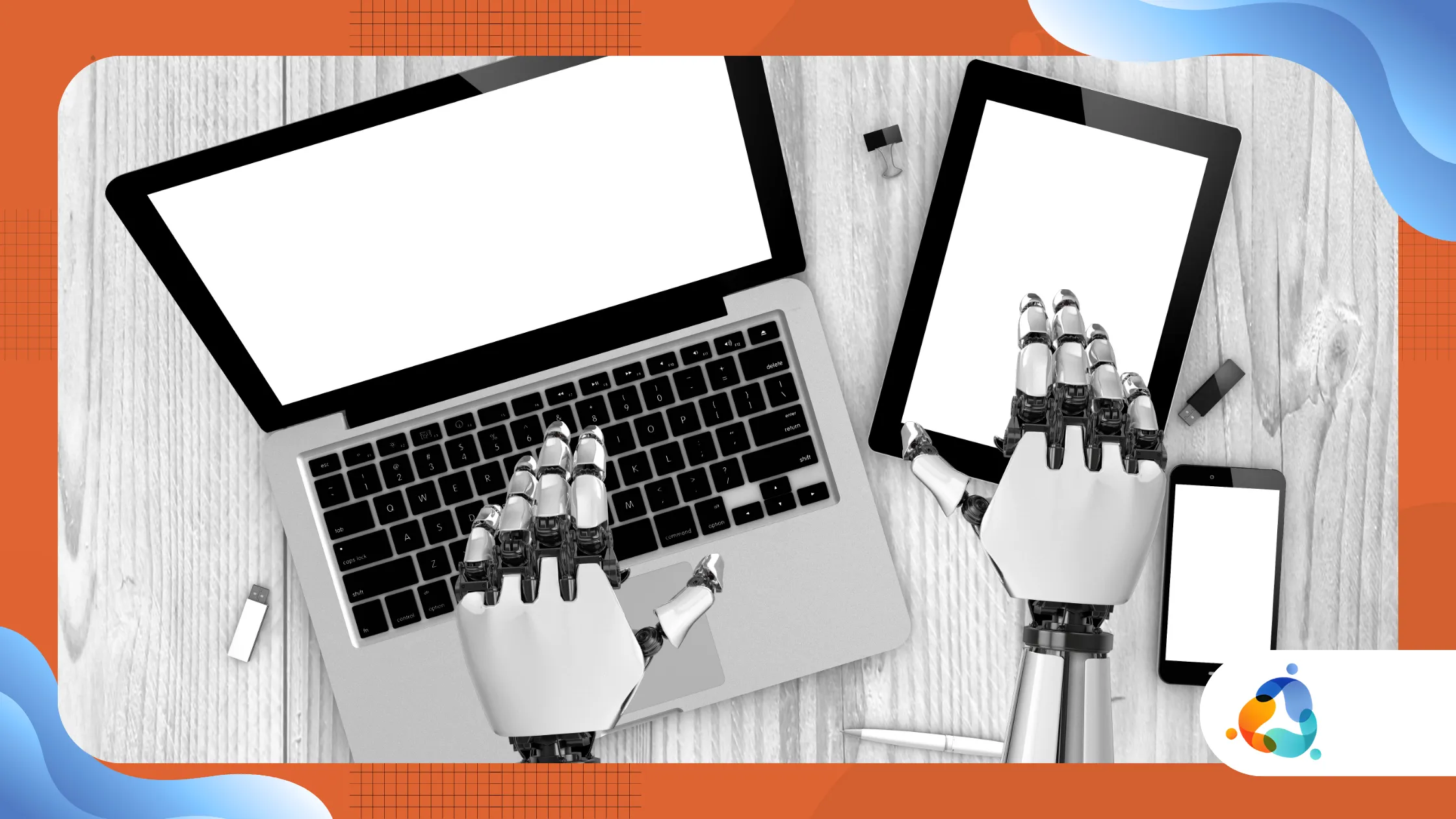
THE Multimodal AI in 2026 It is, essentially, the end of information silos. There was a time when we needed one model to describe an image and another to translate audio.
This fragmentation was what made artificial intelligence "dumb" in practical and improvised contexts.
Today, neural networks operate in a unique latent space. This means that information is not translated from one format to another; it is understood simultaneously.
If you display a complex graph while explaining a question by voice, the system doesn't analyze two files—it understands a single situation.
This ability to synthesize allowed technology to leap into our physical reality.
++Visual filter and video editing apps: trends for social media.
By pointing a device at an industrial motor, the AI not only identifies parts; it listens for the irregular metallic noise and cross-references this sound vibration with visual wear to predict a failure in minutes.
Why the Multimodal AI in 2026 Is it superior to traditional LLM models?
The old Large Language Models were fantastic librarians, but blind to material reality. They knew everything that had been written about gravity, but they didn't know what it was like to see an object fall.
THE Multimodal AI in 2026 resolved this divorce between the word and the image.
By learning from videos and physical interactions, these systems developed a "common sense" that was lacking in the 2023 versions.
The hallucinations, which so haunted long-time users, have decreased drastically because the AI now has a visual basis to validate its textual claims.
The gain was not only intellectual, but also energetic.
With the arrival of neuromorphic processors, the cost of maintaining this constant perception has plummeted.
What once required server farms now runs efficiently on local devices, allowing for ubiquitous intelligence without becoming unsustainable.
++Augmented reality in retail: how to transform the shopping experience.
There's something unsettling about this evolution: personalization has reached an almost visceral level.
The system adjusts its tone and reasoning when it senses, through the camera, that the user is losing patience or interest. The line between assistance and manipulation has never been so thin.
Which sectors were most impacted by this technological convergence?

In medicine, the impact was almost immediate and profound.
THE Multimodal AI in 2026 It acts as an omniscient interconsultant, cross-referencing biopsies, MRI scans, and the patient's verbal history to suggest paths that would escape the most trained human eye.
In retail, the change was both aesthetic and behavioral.
Physical stores have become hybrid spaces where artificial intelligence understands the customer's journey and anticipates their desires.
++The invisible cost of poor technological choices in everyday life.
It's not about intrusive advertising, but about adapting the environment—lights, suggestions, and prices—in real time.
The logistics and automotive sectors were perhaps the ones that most demanded this evolution.
Level 4 autonomous cars now process not only radar, but also the body language of a cyclist around a corner.
This ability to "predict intent" through subtle visual cues is what ultimately brought safety to urban roads.
How did parallel processing architecture enable this evolutionary leap?
The technical secret lies in the new generation of multimodal transformers.
They operate under a cross-attention mechanism that does not prioritize text over image, or vice versa.
There is an equal importance in the processing of stimuli.
This architecture allows the machine to learn by observation, a process much closer to human learning.
By "watching" millions of hours of technical procedures, the AI absorbed nuances of dexterity and coordination that could never be codified in written manuals.
++What is multimodal AI and why should it not be feared?
Furthermore, reinforcement learning now occurs in much shorter cycles.
The system learns from each visual interpretation error almost instantly.
This digital plasticity is what ensures that technology does not stagnate, adapting to the visual and cultural slang that emerges every day.
Ethical challenges and data governance in the age of digital perception.
With so much awareness, privacy has become an elastic and, at times, fragile concept.
THE Multimodal AI in 2026 It can read microexpressions that reveal emotional states that the individual might prefer to hide.
This is often misinterpreted as a mere "UX improvement," but it's an unprecedented collection of biometric data.
The legislative response came with regulations requiring "Content Provenance".
All the content you consume today has an invisible digital watermark that certifies whether it was captured by a real lens or generated by a multimodal network.
It is our only defense against the erosion of truth.
The challenge for 2026 is no longer technical capability, but governance. How do we prevent "all-seeing" systems from becoming tools of social control?
Algorithmic transparency has gone from being a niche topic to a matter of fundamental rights.
The Evolutionary Leap: 2023 vs. 2026
The comparison below is not just about speed, but about the nature of intelligence applied in everyday life.
| Capacity | The Scenario in 2023 | The Reality in 2026 |
| Main Entrance | Text (Isolated prompts) | Continuous Streaming (Voice, Video, Context) |
| Understanding the World | Abstract and Linguistic | Physical and Situational |
| Reliability | High rate of textual hallucination | Multimodal cross-checking |
| Processing | Cloud (High Latency) | Edge/Local (Real Time) |
| Social Function | Information Consulting | Operational and Creative Partnership |
The omnipresence of Multimodal AI in 2026 It has redrawed the boundary between the digital and the physical.
We are no longer just "using" computers; we are coexisting with systems that interpret our reality with almost human accuracy.
Ignoring this integration is choosing obsolescence. For companies, multimodality is the key to survival in a market that no longer accepts generic solutions.
For individuals, the challenge is learning to navigate a world where intelligence is everywhere, observing, listening, and above all, learning from us.
FAQ: Understanding Multimodal AI
Can multimodal AI really read my emotions?
It identifies facial and tonal patterns that correspond to human emotions. Although it doesn't "feel" emotions, the accuracy in interpreting the user's mood is high enough to deeply personalize interactions.
What is the practical difference between ChatGPT in 2023 and AI in 2026?
While the 2023 model was an excellent writer, the AI of 2026 is an executive assistant that can see your screen, listen to your meeting, and suggest actions based on everything happening around you.
Is it safe to use multimodal AI in corporate environments?
Security depends on governance. By 2026, companies will use on-premise models or private clouds where visual and audio data remain under the organization's control, mitigating the risks of industrial espionage.
Will this technology eliminate manual jobs?
She is transforming the nature of these jobs. In technical support or maintenance, the worker is now augmented by AR glasses that project multimodal instructions, requiring more supervision and less technical memorization.
