
Public Tender Fee Exemption: Low-income families
Advertisements
Exempting fees for public tenders is an important measure adopted by the government to ensure greater inclusion of opportunities.
Many Brazilians dream of a job in public service, which offers stability, good salaries and benefits.
However, the registration fees for competitions, which can be quite high, are often an obstacle for low-income people.
>> Exemption from fees in federal competitions, and avoidance of costs – Find out how <
Waiving these fees is a way to democratize access, allowing candidates from all walks of life to participate in the selection process. Above all, without the cost of registration becoming a barrier.
However, to benefit from the registration fee for public tenders, the candidate must meet certain requirements.
Advertisements
First of all, to participate in any Federal Government Social Program, you must register with “CadÚnico”.
Up to three minimum wages per person for low-income families only. Being registered with CadÚnico facilitates access to various social programs and is also an important criterion for requesting exemption in many public exams.
Additionally, in some contests, people who are regular blood donors or Electoral Court volunteers may also be entitled to fee exemptions.
Exemption from public tender fees and rules
Each public tender has its own specific rules, so it's important for candidates to carefully read the official notice to determine the exemption requirements for that particular competition.
Exemption from fees is essential because registration for competitions can be expensive, ranging from R$$ 50 to more than R$$ 300, depending on the level of the position (elementary, intermediate or higher) and the institution organizing the competition.
This amount for a low-income person is a great achievement, if the aspirant is unemployed, it is a great obstacle.
Often, those who are unemployed or in a situation of social vulnerability are already facing financial difficulties and cannot afford these costs.
Therefore, waiving the registration fee becomes a way of opening doors for those who would otherwise not be able to participate.
Compete on an equal footing
Furthermore, the exemption helps to increase the diversity of profiles among candidates, which enhances competitiveness and meritocracy in public examinations.
People from different backgrounds and social classes can compete on an equal footing, ensuring that public service has representatives from diverse sectors of society.
The process for requesting an exemption is generally straightforward. Applicants must follow the instructions in the notice and, in most cases, submit documents proving their low-income status, such as their Social Identification Number (NIS), obtained through CadÚnico.
NIS: No registration fees
The NIS (Social Identification Number) is a key registration for those seeking exemption from registration fees, especially in various programs and public service exams in Brazil.
It's essentially your access code to prove you're part of a low-income family, according to the criteria of the Single Registry (CadÚnico) for Federal Government Social Programs.
This number is essential for verifying your socioeconomic status. When requesting exemption from public exams, for example, you provide your NIS (National Social Security Number) and CadÚnico data.
If your per capita family income falls within the limits (usually up to half the minimum wage per person), the exemption may be granted.
It is an important tool for ensuring access to education and opportunities for those who need it most.
The candidate may also occasionally request the exemption within a specific timeframe, which is usually before the general registration period.
Finally, it's important to remember that even if you request an exemption, you still need to pay attention to the other stages of the exam, including registration confirmation and exam preparation.
The fee waiver is a great help, but it's essential to continue dedicating yourself to studying and planning to be successful in the selection process.
In short, forgiveness in public contracts to democratize access to public services is a useful social approach.
Professional advice
It ensures that vulnerable people can compete for these opportunities without the financial burden of registration fees. This allows more Brazilians, regardless of their economic status, the chance to change their lives through a public career.
To obtain a fee waiver, the competition announcement must be clearly stated. Candidates must confirm their acceptance of the requirements at the time of registration, as stated in the announcement.
Any pensioner who provides false information to obtain an exemption will have their application canceled and will be deemed ineligible. If an infraction is found after approval, the candidate may have their appointment revoked.
Expanding competition possibilities
Talking about fee exemptions in public tenders is always a relief for many people!
The big news is that the federal government and many state and municipal agencies have maintained and even expanded the possibilities.
So that low-income candidates or those in other specific situations do not have to pay the registration fee.
The main way is still to be registered in the Single Registry (CadÚnico), with updated data and proving family income of up to half the minimum wage.
Furthermore, bone marrow donors also have this right guaranteed by federal law.
There are bills under consideration that aim to expand the exemption to other groups, such as people with disabilities and regular blood donors. However, this still requires approval and specific regulations at each level.
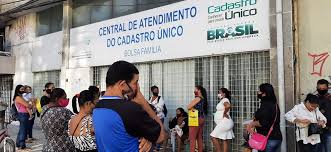
It is a right; Exemption from public tender fees
Requesting a fee waiver for the Federal Police (PF) exam is a right that can make your participation easier.
The first and most important step is to read the full competition announcement as soon as it's released. It will contain all the rules and the application deadline.
Generally, the main groups that can request an exemption are:
1- Registered in the Single Registry (CadÚnico), with updated data and proving family income of up to half the minimum wage per person. 2 – Bone marrow donors in entities recognized by the Ministry of Health.
The application is submitted online, on the organizing body's website, within a specific deadline. You'll fill out a form and attach documents proving your eligibility.
It is crucial not to miss the deadline and ensure that the documentation is correct to avoid having your application denied.
The drive for inclusion is likely to increase opportunities for exemption, making competitive exams more accessible to everyone, even those who dream of a position in public service.
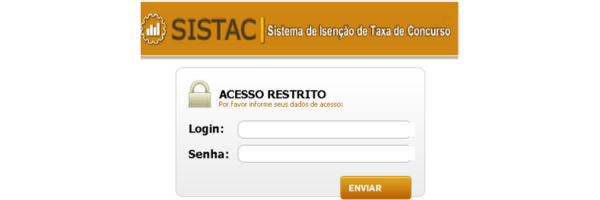
Source: Senate Agency
