
Cell phones with tri-fold screens: new trend or overkill?
Advertisements
You Cell phones with tri-fold screens They represent the pinnacle of contemporary mobile engineering, challenging the conceptual boundaries between traditional smartphones, conventional foldable devices, and compact tablets.
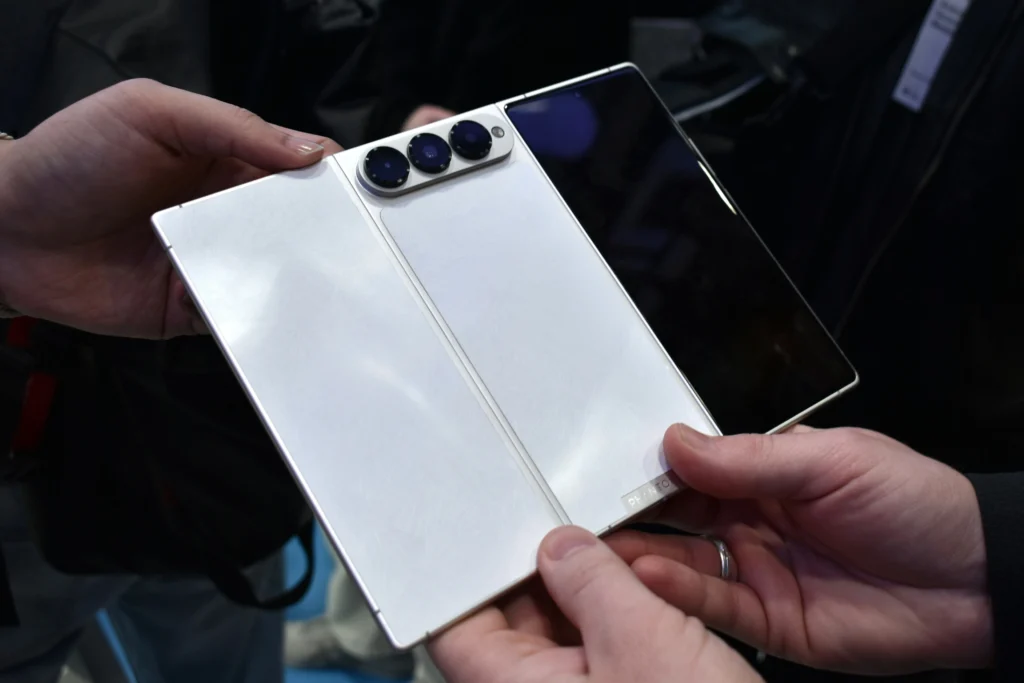
This hardware evolution introduces a double-hinge mechanism that folds the flexible display into three distinct parts, forming a "Z" or "G" shaped silhouette.
Far from being just a conceptual lab prototype, this technology has reached the commercial market to serve users who demand maximum mobile productivity.
Advertisements
This article analyzes the fundamentals of this screen architecture, the durability challenges of the mechanical components, and the true cost-benefit of this new premium category.
What is a smartphone with a tri-fold screen and how does its engineering work?
The structural engineering of a triple-fold device is based on the harmonious integration of two physical hinges that operate in opposite or complementary directions.
This configuration allows an ultra-thin and flexible OLED display to be retracted into a compact body, expanding when fully opened.
One of the folds bends inward, protecting the flexible glass, while the other bends outward, leaving a section of the screen exposed for quick use.
This arrangement eliminates the need for a secondary external screen, reducing the overall thickness of the device's chassis compared to stacked designs.
The materials used in these screens involve advanced polymers and layers of ultra-thin glass (UTG), capable of withstanding hundreds of thousands of opening cycles.
The great achievement lies in reducing the central crease, distributing the mechanical stress over a slightly larger and more flexible surface area.
How does the operating system interface adapt to this screen format?
Develop software for cell phones with tri-fold screen It requires the operating system to instantly reconfigure the app display ratio according to the level of openness.
The transition algorithms detect the exact angle of the hinges, smoothly switching between compact smartphone, mini-tablet, or full-size work monitor usage modes.
This flexibility allows you to drag and drop multiple applications simultaneously, creating a multitasking work environment identical to that of a desktop laptop.
Professionals can analyze complex spreadsheets, participate in video conferences, and write reports all within the same interface without switching windows or experiencing annoying visual interruptions.
To understand how this new category compares to established formats, the table below details the average technical specifications found in the mobile device market:
| Device Category | Average Screen Size When Open | Average Thickness Closed (mm) | Complexity of Hinges | Main Focus of Use |
| Traditional Smartphone | 6.1 to 6.8 inches | 7.5 to 8.5 mm | None (Rigid Structure) | Portability and quick one-handed use |
| Foldable Type“ | 7.6 to 8.0 inches | 11.0 to 13.5 mm | An Internal Hinge | Media consumption and basic multitasking |
| Folding Tri-Fold Type“ | 9.5 to 10.2 inches | 12.0 to 14.0 mm | Two Combination Hinges | Extreme productivity and tablet replacement |
The data shows that, despite having significantly larger screens, the thickness of these closed models remains close to that of conventional first-generation foldable phones.
This optimization of physical space represents a remarkable advance in daily usability within the consumer's pocket.
Why does the durability of the two hinges cause concern among consumers?
The increasing number of moving parts in an electronic device exponentially raises the potential points of mechanical failure and structural wear over time.
You cell phones with tri-fold screen They expose a portion of the flexible display to the external environment when closed, increasing the risk of accidental hazards.
Dust, debris, and small particles of sand remain the biggest enemies of the internal gears that make up the articulation system of the device.
Manufacturers are developing microscopic internal brushes to seal these crevices, but certification against complete water and dust resistance remains a complex challenge.
To understand global research on new polymers, stress testing on screens, and industrial innovations in flexible materials, users can consult the specialized portal of... Society for Information Display (SID), which compiles scientific advances in the sector.
When does this three-fold design stop being innovative and become overkill?
The line that separates utilitarian advancement from technological excess lies in the user's actual need to carry a ten-inch screen in their pocket.
For corporate clients who travel constantly and need to review code or edit videos, the convenience of dispensing with a laptop is obvious.
On the other hand, for the average consumer who limits their use to social media and messaging, the extra weight and prohibitive price make the format redundant.
Read more: Cell phones with 200MP cameras: the real difference in photos
The app ecosystem also needs to mature, as many software programs still don't efficiently take advantage of the expanded aspect ratios of these screens.
The cost of repairing a display of this size represents another significant factor that deters traditional shoppers from physical stores.
Replacing a damaged triple OLED panel can cost more than half the total value of the device, requiring expensive accident insurance.
Is it worth investing in this technology in today's tech market?
Analyzing the timing of a purchase requires caution, as the first models in any category carry the cost of research and development for the manufacturer.
Purchase cell phones with tri-fold screen It now places the user in the position of an early adopter of a technology that will undergo severe refinements.
Learn more: 5G and Wi-Fi 7 technology in Brazil: real evolution in 2026
The trend suggests that prices should fall as the global supply chain optimizes the mass production of these complex display panels.
Until the market reaches that cost equilibrium, the category will remain a symbol of technological status for hardware enthusiasts.
The Future of Flexible Displays and their Impact on Urban Mobility
The consolidation of the three folds proves that the mobile phone industry is not stagnant, seeking real alternatives to reinvent data consumption.
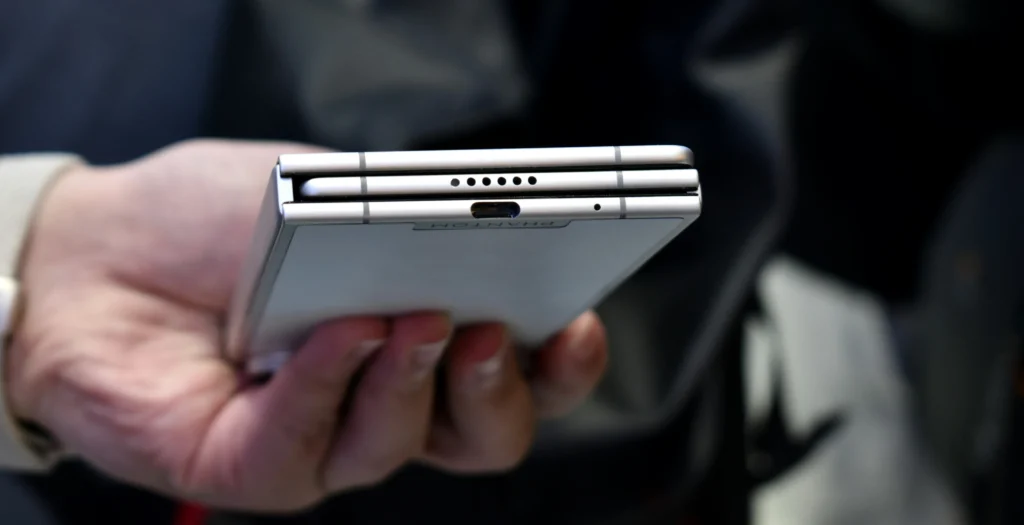
Breaking through the eight-inch barrier without compromising basic portability redefines our relationship with everyday work tools.
Read more: Most anticipated cell phones of 2026: confirmed releases
The success of this trend will depend on the brands' ability to deliver thinner, more durable, and more affordable devices in the coming launch cycles.
Whether you're an enthusiast or a critic, it's undeniable that the boundaries of mobile design have been forever expanded by these innovative displays.
To access detailed reports on the evolution of industrial patents, mobile market analyses, and consumer behavior in the electronics sector, visit the portal of... International Data Corporation (IDC).
Frequently Asked Questions (FAQ)
How does the virtual keyboard work on a phone with an open tri-fold screen?
When the device is fully extended, the virtual keyboard splits into two floating sections on the sides of the screen to facilitate typing with the thumbs. The user can also connect physical keyboards via Bluetooth, transforming the device into an extremely lightweight and productive workstation.
Does the screen on this type of device scratch more easily than that of a regular cell phone?
Yes, because foldable screens use protective layers of plastic polymers combined with ultra-thin glass to allow for the necessary flexibility of the joints. This material composition has less resistance to surface scratches from keys or coins when compared to traditional rigid glass.
Is it possible to use the device only partially open, as if it were a regular folding phone?
Yes, the internal sensors and software recognize when only one of the folds is open, immediately deactivating the hidden section of the display. This allows the consumer to use the smartphone in three different screen size modes, depending on their needs at the moment.
Do tri-fold cell phones support precision stylus pens?
Some premium models feature digitizing layers compatible with highly sensitive stylus pens, facilitating technical drawings and handwritten notes directly on the open display. However, it is necessary to use pens with specific soft tips to avoid permanent damage to the flexible protective film.
