
PCIe 5.0 SSD storage: is it worth the upgrade?
Advertisements
Analyze the impact of PCIe 5.0 SSD storage In today's technological landscape, it's crucial to demystify the relationship between inflated marketing figures and actual performance gains.
With the maturation of next-generation processor platforms, data buses have expanded their traffic capacity, enabling previously unimaginable transfer speeds.
However, the transition to this new hardware category is not simply a matter of plugging a faster component into your compatible motherboard.
Advertisements
The user needs to carefully assess whether their daily workflow truly saturates existing connections or if the investment will only bring imperceptible improvements to their routine.
What is PCIe Fifth Generation technology and how does it double speeds?
The fifth-generation Peripheral Component Interconnect Express specification raises data transfer rates to unprecedented levels in home and enterprise computing.
Using the same number of physical lines as previous generations, this architecture doubles the bandwidth through improvements in signal encoding.
While the best fourth-generation drives stabilized their peak read speeds in the range of seven thousand megabytes per second, the new controllers reach fourteen thousand.
This significant increase in efficiency accelerates the movement of massive files, directly benefiting data servers, complex three-dimensional modeling, and professional workstations.
The efficiency of PCIe 5.0 SSD storage It lies in the use of ultra-high-density NAND flash memories stacked in hundreds of microscopic vertical layers.
These silicon chips communicate directly with the main processor, reducing file search times and eliminating historical processing bottlenecks.
Why has thermal management become the biggest challenge for these new drives?
The exponential increase in data transmission speed generates, as an inevitable physical byproduct, a massive amount of thermal energy concentrated in the central controller.
Without a properly sized cooling system, the chip quickly reaches its critical operating temperature within seconds of use.
When this thermal limit is reached, the drive's firmware activates a protection mechanism known as thermal throttling, deliberately reducing the speed to cool down.
Therefore, the vast majority of these models are sold with gigantic aluminum heat sinks or small, noisy built-in fans.
To consult detailed analyses of electronic engineering, verify global semiconductor standards, and understand the technical specifications of industrial data buses, the Institute of Electrical and Electronics Engineers Portal (ieee.org) It represents the largest specialized scientific collection on the planet.
| Technical Performance Metric | PCIe 3.0 SSD storage | PCIe 4.0 SSD storage | PCIe 5.0 SSD storage | Main Associated Bottleneck |
| Maximum Reading Speed | Up to 3,500 MB/s | Up to 7,500 MB/s | Up to 14,500 MB/s | Controller Heating |
| Bandwidth per Line | 1 GB/s per line x4 | 2 GB/s per lane x4 | 4 GB/s per lane x4 | Physical Limitations of Silicon |
| Operating Thermal Profile | Low (Optional Heat Sink) | Moderate (Simple Heat Sink) | Extremely high (Requires active cooler) | Temperature-related deceleration |
| Peak Electrical Consumption | 3.5W to 5W | 6W to 9W | 11W to 14W | Memory Cell Wear |
Which user profiles actually derive practical benefit from this hardware?
For gamers focused on frame rates or average office users, the difference in practical performance is almost negligible.
Read more: Tips for choosing a cell phone with good storage space!
Everyday activities such as starting up the Windows operating system or opening internet browsers are unable to take advantage of the excess bandwidth offered.
The scenario changes drastically when we consider professionals who edit ultra-high-resolution video and manipulate uncompressed raw files in real time.
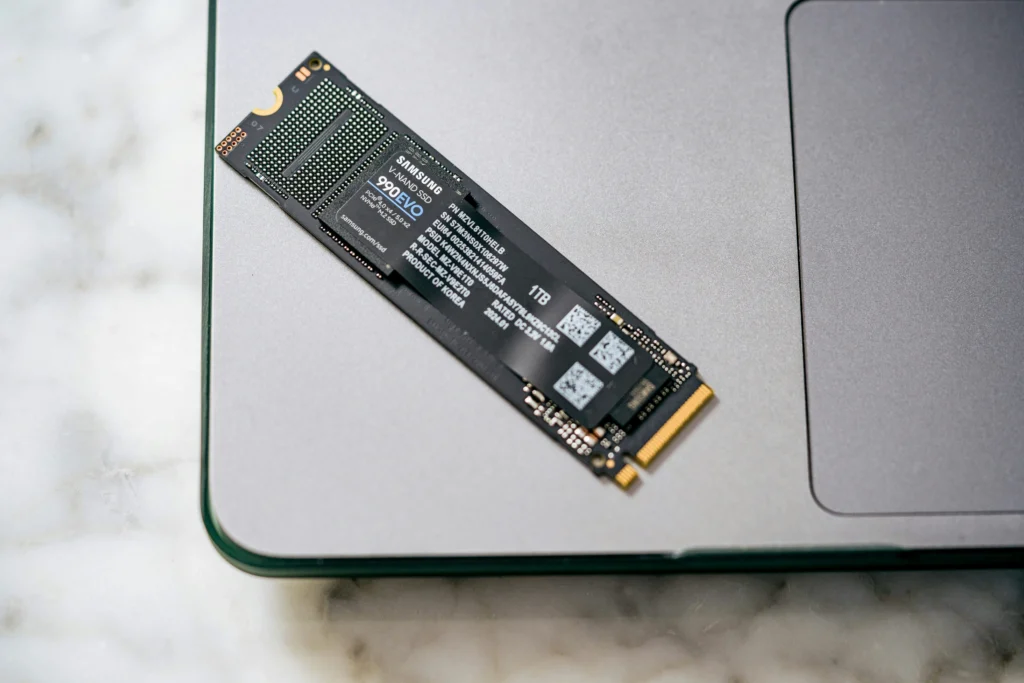
Data scientists who process artificial intelligence locally and software engineers who compile gigantic code also save precious hours of work weekly.
Invest in PCIe 5.0 SSD storage It only makes sense if the rest of your hardware ecosystem is balanced with that power.
High-end motherboards, high-frequency RAM, and processors with multiple dedicated communication lines are mandatory prerequisites to avoid structural bottlenecks.
How are DirectStorage and new APIs changing the future of loading in games?
The traditional game loading architecture sends compressed data from the drive to system memory, passing through the processor before the graphics card.
This lengthy path generates noticeable delays in loading screens, limiting the rendering speed of vast open worlds on consoles and computers.
Learn more: Android update causing phone to freeze: how to fix it quickly
DirectStorage technology changes this dynamic by allowing the video card to extract image files directly from the storage memory modules.
This technical advancement reduces the use of the main processor and opens the door to virtual worlds without any visible transition screens.
To examine consumer hardware compliance guidelines, access storage data protection reports, and review corporate digital security regulatory guides, the Federal Trade Commission (ftc.gov) It provides the necessary institutional support for the global consumer market.
Deciding the exact moment to migrate to the next technology generation.
The consolidation of new hardware interfaces follows a predictable maturation cycle, where the first models adopted present prohibitive costs and engineering challenges.
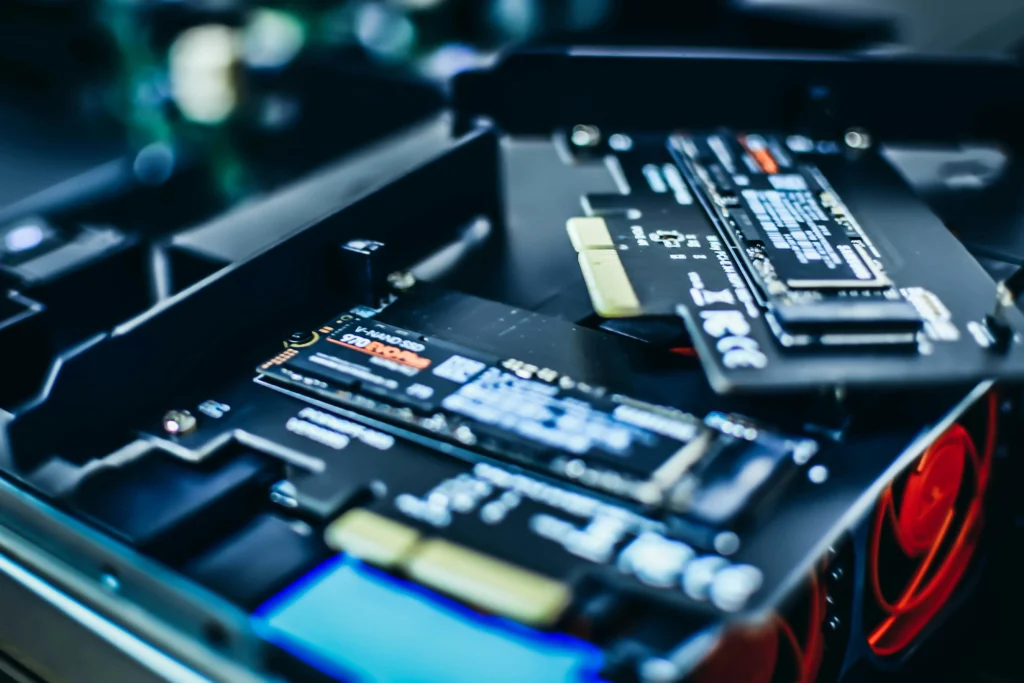
Waiting for the market to mature is usually the smartest choice for most enthusiasts who build custom computers.
Read more: Cell phone restarting on its own: common problems
Analyze the thermal profiles and transfer rates organized in our specification matrix, check the physical space of your cabinet, and assess your actual professional needs.
By understanding the variables of PCIe 5.0 SSD storage, You spend your money wisely and get the most out of your machine.
Frequently Asked Questions about PCIe 5.0 Storage
Can I install a fifth-generation SSD in an older motherboard that only supports PCIe 4.0?
Yes, the physical interface is fully backward compatible, however the drive will operate at maximum speeds limited to the fourth generation, negating the benefit of the more expensive investment.
Are the new fifth-generation SSDs compatible with the PlayStation 5 console?
No, because the Sony console requires smaller heatsinks and natively operates on the fourth-generation interface, making fifth-generation drives physically incompatible.
Could the higher power consumption of these components cause the PC's power supply to overheat?
Not directly, because the extra power consumption of approximately fourteen watts is easily supplied by any good quality modern power supply on the market.
Are these models worth buying for use in thin laptops?
Currently, this is not recommended because the large size of the required heat sinks and the high rate of heat dissipation prevent safe installation in the narrow chassis of laptops.
