
Passkeys replace passwords: how the new technology works
Advertisements
Understanding the speed at which Passkeys replace passwords. In major banking services, social networks, and corporate platforms by 2026, it helps internet users protect their digital identities against massive data breaches.
The traditional method of authentication using alphanumeric character combinations has become the weakest link in global cybersecurity, given the proliferation of automated social engineering attacks.
By delegating the validation process to the asymmetric cryptography mechanisms integrated into smartphones and personal computers, the technology industry eliminates the risk of remote credential theft.
Advertisements
This structural transition reduces operational costs related to technical support, accelerates navigation flows, and protects the digital ecosystem against access cloning campaigns.
Adopting this new standard requires understanding the fundamentals of public-key cryptography, cloud synchronization, and account recovery mechanisms.
What are passkeys and how do they eliminate the need to memorize complex access codes?
These digital credentials represent an authentication standard based on specifications created by the FIDO Alliance and the World Wide Web Consortium, replacing typed text with unique cryptographic signatures.
The system works by generating a pair of distinct mathematical keys at the moment the user creates an account on a compatible platform.
The finding that the Passkeys replace passwords. This stems from the fact that the user only needs to interact with the physical lock of the device itself.
Validating access via fingerprint reader or facial recognition unlocks the key stored on the device's isolated security chip.
Since no confidential information leaves the hardware of the cell phone or computer, cybercriminals are unable to intercept useful data during network transmission.
This structural separation redefines digital defenses, transforming the login routine into a simple, fast, and inviolable procedure.
Why does asymmetric key engineering offer complete protection against phishing attacks and data leaks?
The secret to this immunity lies in the mandatory cryptographic link between the generated credential and the specific domain of the corresponding website or application.
A fake website designed to impersonate a large bank cannot request a digital signature because the browser immediately identifies the address discrepancy.
This precision prevents unsuspecting users from accidentally providing access to online scammers, neutralizing the effectiveness of classic online identity theft tactics.
To explore information security specifications, international technical regulations, and global internet infrastructure standards, visit the portal of... W3C (World Wide Web Consortium).
Conversely, intrusions into corporate servers no longer expose that company's clients to secondary digital security risks.
The compromised databases contain only useless public keys in isolation, leaving users' private keys intact within their respective smartphones.
What are the technical differences between digital keys and traditional login methods?
Migrating to new digital protection ecosystems requires evaluating parameters such as navigation friction, resilience against remote attacks, and dependence on cellular networks.
To compare the specifications of established identity verification technologies in the market in 2026, analyze the structured data below:
| Authentication Mechanism | Resilience against Phishing | Average Authentication Time | Type of Encryption Used | Known Primary Vulnerability |
| Alphanumeric Passwords | Completely null | $12\text{ to }18\text{ seconds}$ | Simple Hash on the Server | Social engineering and brute force |
| SMS (MFA) codes | Low (Interceptable) | $20\text{ to }35\text{ seconds}$ | No Encryption on the Line | Cell phone chip cloning (SIM swap) |
| Authenticating Apps | Average (Subject to deviations) | $15\text{ to }25\text{ seconds}$ | Time-to-Time (TOTP) Algorithms | Push notification fatigue |
| Digital Keys (Passkeys) | Completely immune | $2 a 4 seconds $ | Asymmetric (Public/Private Key) | Physical access to the unlocked device |
Numerical data demonstrates that digital keys offer the lowest operational friction rate combined with the highest level of protection against external interception.
Eliminating intermediate typing steps reduces shopping cart abandonment on e-commerce platforms.
How does cloud backup manage credential synchronization without compromising data privacy?
Modern password managers and native operating systems synchronize credentials across multiple devices belonging to the same user using end-to-end encryption.
This process ensures that not even cloud storage providers can view the contents of the private keys.
The ease with which Passkeys replace passwords. It remains even if the individual buys a new cell phone from a completely different manufacturer than the previous one.
Read more: Careful consideration when choosing passwords and using two-factor authentication in important apps.
Simply connecting the main account will restore automated access to all services previously configured in your daily routine.
For scenarios where access occurs via public or third-party computers, the system uses near-field communication technology or two-dimensional code reading.
The computer generates a visual challenge on the screen, which the mobile phone resolves locally via a secure Bluetooth connection.
When are Brazilian companies required to switch to passwordless authentication?
Adoption becomes urgent as compliance guidelines for the protection of personal data financially penalize corporations negligent in data breaches.
Sectors dealing with financial transactions, occupational health records, or e-commerce should lead this hardware transition immediately.
Learn more: Tech tips to protect your data without becoming a digital paranoid.
Implementing this modernized infrastructure positions brands as benchmarks in reliability, building solid business relationships based on the active protection of digital consumer rights.
Reducing electronic fraud protects profit margins and decreases the volume of disputed lawsuits.
The Ultimate Path to a Frictionless Digital Future
The obsolescence of traditional passwords signals a mature evolution in how society interacts with networked computing systems.
Replacing tedious manual routines with hardware-based security automation raises the barriers against cybercriminals, protecting the digital economy.
Read more: Adaptive cybersecurity in 2026: trends and how to protect yourself.
Ensuring that technological inclusion occurs in a simple, accessible, and safe way is a vital pillar for contemporary social development.
Spreading knowledge about these innovative tools empowers the average citizen, protecting their informational resources against complex threats from the virtual environment.
To access information security analyses, reports on technological vulnerabilities in the national context, and practical guides on digital compliance, please visit the portal of... Cetic.br (Regional Center for Studies on the Development of the Information Society).
Frequently Asked Questions (FAQ)
What happens to my account details if I lose my registered smartphone?
Since digital keys are saved in encrypted backups linked to your primary Apple, Google, or Microsoft account, your credentials remain secure in the cloud.
When you set up a new device with your account and pass the standard identity checks, all your automatic access will be restored instantly.
Could a hacker steal my digital keys by intercepting my Wi-Fi network?
No, the technology is based on a cryptographic challenge where the cell phone only sends a mathematical signature to prove that it possesses the private key, without ever transmitting the key itself.
Even if a criminal intercepts all the traffic on a wireless network, they will only obtain useless, disposable codes.
Can I use physical security keys instead of relying on my smartphone?
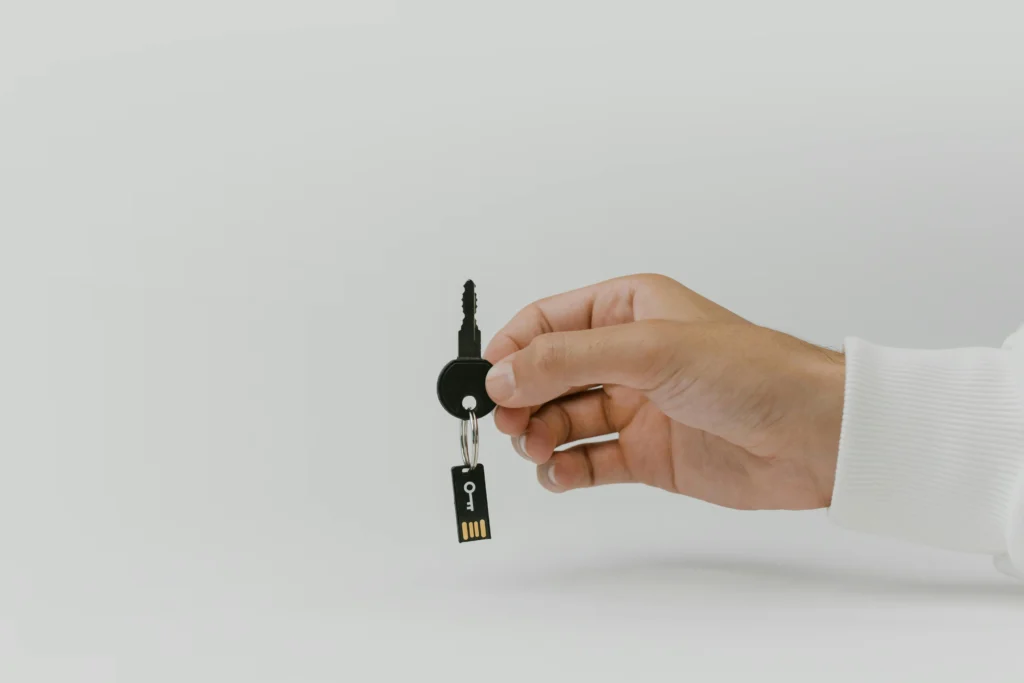
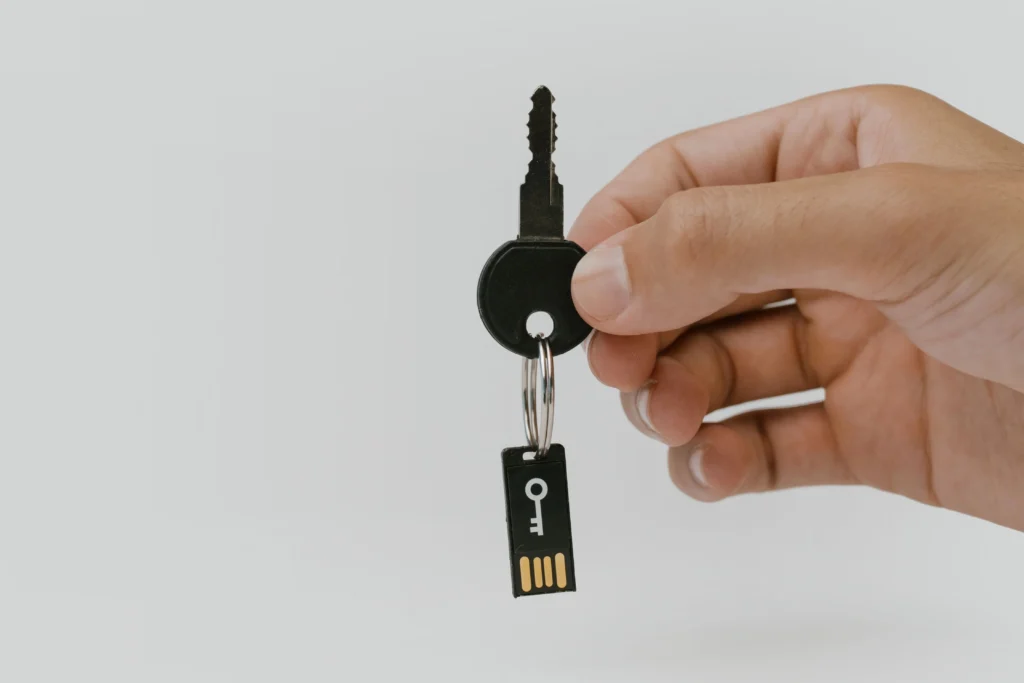
Yes, the standard is fully compatible with physical security keys connected via USB port or NFC proximity, such as devices in the YubiKey line.
This alternative is widely adopted by professionals who manage critical infrastructure servers or who prefer not to use biometrics on mobile phones.
Do passkeys work on older computers or outdated operating systems?
Very old devices that lack modern security chips or support for updated browsers may face limitations in generating native local keys.
In these exceptional cases, websites often offer temporary secondary login methods, even though these traditional channels present high security risks.
