
Cell phones with satellite connection: how will they work in 2026?
Advertisements
The revolution of Cell phones with satellite connection It has gone from being a futuristic promise to becoming the global standard for resilience and connectivity by 2026.
What began as a limited emergency resource is now integrated into the daily lives of millions of Brazilians, eliminating those "dead zones" of coverage that historically isolated rural regions and remote areas of our country.
In this guide, we unveil the technological layers that allow your smartphone to communicate directly with constellations in low Earth orbit.
Advertisements
Let's explore the evolution of hardware, the real costs involved, and how this infrastructure is transforming security and communication on a near-ubiquitous scale.
What is satellite internet for smartphones and how has it evolved?
Until recently, communicating with satellites required robust equipment and cumbersome external antennas, the infamous "brick" expedition antennas.
By 2026, the integration of advanced modems and dense satellite constellations will allow conventional devices to connect without any physical modifications that you can notice with the naked eye.
The big turning point came with the expansion of low-Earth orbit networks, which operate much closer to Earth than traditional geostationary satellites.
This proximity drastically reduces latency, allowing not only the sending of short texts, but also voice calls and basic data browsing that actually works.
There's something fascinating, and perhaps a little unsettling, about how this technology has democratized access to the internet, but make no mistake.
The system functions as an essential layer of redundancy; it's not yet time to cancel your fiber optic connection, although the feeling of never being "out of range" is liberating.
How will Direct-to-Cell technology work in 2026?
The system works by relying on the satellite's ability to act as a "cell phone tower in space," capturing the radio signal emitted by the smartphone.
Instead of relying on ground-based towers, the device directs the signal into a vacuum, where satellites equipped with highly sensitive antennas process the information.
Chip manufacturers have finally mastered the firmware for modems to handle the Doppler effect and the constant movement of LEO satellites.
This ensures that the signal transition between one satellite and another is imperceptible, maintaining the continuity of the data session while the device "chases" the signal in orbit.
For those seeking technical details on spectrum allocation and international standards, the website of ITU (International Telecommunication Union) details the global agreements necessary for the Cell phones with satellite connection They operate without interfering with terrestrial 5G and 6G networks.
What are the main advantages of using cell phones with satellite connectivity?
The main advantage is the network's ubiquity, something fundamental for agribusiness professionals, adventurers, and isolated communities in the Amazon.
In natural disasters, where ground-based towers are often the first to fall, the orbital connection remains intact, serving as a lifeline through precise geolocation.
In addition to security, the commercial aspect has become viable for companies that operate logistics fleets in areas where traditional cell phone signal is nonexistent.
The subscription cost, which was once prohibitive, has been diluted by competition among major players, making it an affordable optional service in many national mobile plans.
It's common to hear that this technology would make traditional operators obsolete, but reality has followed a path of partnership.
Brazilian telecom companies are now leasing satellite capacity to extend their national coverage without the need to install thousands of kilometers of cables and physical towers in unsuitable terrain.
Comparison of Connectivity Technologies (Data 2026)
| Appeal | Terrestrial Networks (5G/6G) | LEO Satellites (2026) | Geostationary Satellites |
| Average Speed | 1 Gbps+ | 10 Mbps to 50 Mbps | 5 Mbps to 15 Mbps |
| Latency | < 10ms | 25ms to 40ms | > 600ms |
| Coverage | Urban and Highways | Global (Open Sky) | Global (Static) |
| Device | Regular Smartphone | Compatible Smartphone | Special Satellite Phone |
| Main Use | Streaming and Games | Redundancy and Rural Areas | Maritime and Military Use |
Why is latency still a challenge for orbital communications?
Even with satellites flying at an altitude of about 550 km, the signal needs to travel into space and back to a ground station.
This physical journey imposes natural limits on the speed of light, resulting in a latency slightly higher than that of a cell tower on the corner of your street.
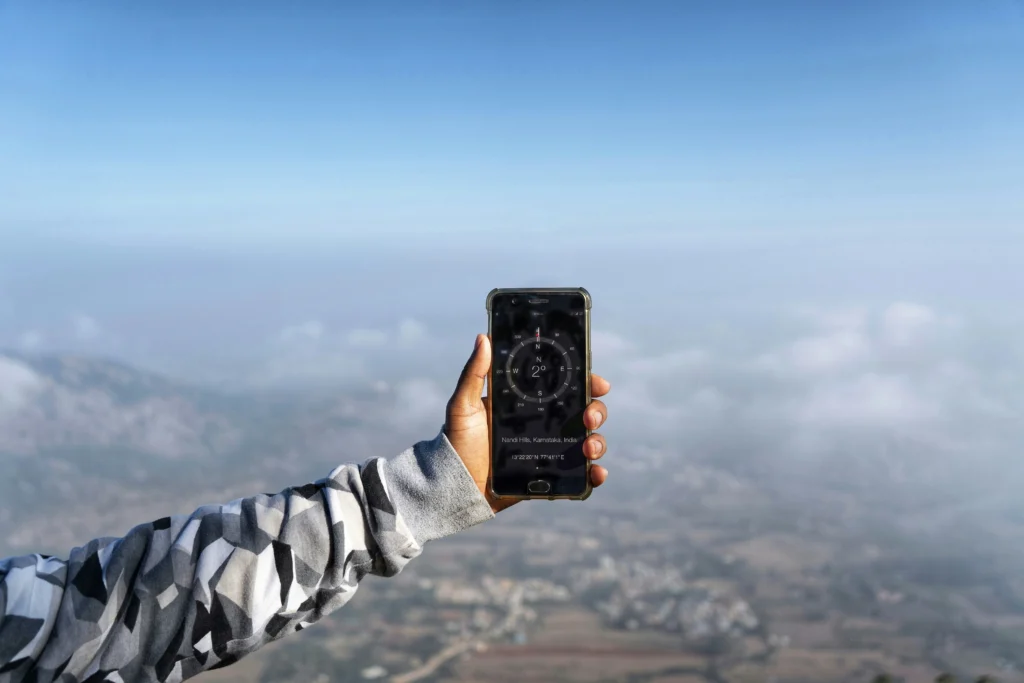
Despite the Cell phones with satellite connection Supporting clear voice calls by 2026, competitive online gaming, or heavy 4K streaming still faces bottlenecks.
Learn more: Top 5 technologies that started as science fiction and became reality
However, for productive tasks and interpersonal communication, this millisecond difference became virtually imperceptible to the average user.
The evolution of compression algorithms and the increase in the number of satellites in orbit are gradually mitigating this delay.
Today, technology can prioritize voice and text packets, ensuring that essential communication flows with top priority, regardless of current network load.
Which devices already support this connectivity on the Brazilian market?
Currently, the top-of-the-line models from major global manufacturers already come with the necessary hardware integrated from the factory.
Devices using the latest processors can automatically switch between terrestrial and satellite networks whenever the conventional signal drops below a critical usability threshold.
Brazil has become a strategic market due to its vast territorial extension, which has accelerated the approval of these devices by regulatory bodies.
Read more: What comes after 5G? An analysis of 6G, connectivity, and the future of networks
Ease of use is the focus: the operating system notifies you when you are under satellite coverage, guiding the device's positioning in relation to the sky.
To check if your current or next model is certified to operate in the country, consult the databases of Anatel (National Telecommunications Agency).
There, you can check which satellite frequency bands have been authorized for commercial use in Brazilian territory, avoiding surprises with incompatible imported devices.
When will satellite connectivity become the standard on all cell phones?
Experts predict that by the end of this decade, even entry-level cell phones will have this functionality as a basic security feature.
The continuous reduction in the cost of launching satellites and the miniaturization of hardware components are impressively accelerating this process of technological democratization.
The increased demand for autonomous vehicles and the Internet of Things (IoT) in agriculture is also driving this global standardization.

Learn more: 5G and Wi-Fi 7 technology in Brazil: real evolution in 2026
By 2026, we are already seeing the first signs that full connectivity is no longer an elite privilege, but a basic digital right for the socioeconomic inclusion of those who live far from urban centers.
We're no longer just talking about sending a distress SMS, but about maintaining workflow in any geographic location.
You Cell phones with satellite connection They represent the end of involuntary isolation, allowing innovation to reach places where asphalt and fiber optics have not yet been able to reach.
FAQ: Frequently asked questions about satellite connection
Does satellite internet work inside buildings or tunnels?
No. For a smartphone to pick up signals from LEO satellites, it needs a clear line of sight to the sky. Dense obstacles like concrete, metal, and soil block the frequencies used.
Do I need to pay an extra fee to use the satellite?
It depends on your provider. By 2026, many premium plans already include a basic satellite data allowance. Simpler plans may charge for excess usage or require the activation of a specific "travel package".
Does your cell phone battery run out faster in satellite mode?
Yes. The effort required by the modem to send the signal into space consumes more energy than communication with a nearby tower. Its use is recommended only for necessary communications or in emergency mode.
Is satellite internet secure against interception?
Yes, the networks of 2026 use end-to-end encryption and robust authentication protocols. Because the signal travels directly into space, it is much more difficult to intercept by fake towers or local attacks.
The consolidation of Cell phones with satellite connection This marks the beginning of a new era in telecommunications, where the concept of "out of area" is gradually becoming obsolete.
This technology not only solves logistical communication problems, but also establishes an unprecedented global security network for every individual with a smartphone in their pocket.
By balancing technical innovation with strategic partnerships, the technology sector delivers a resilient and indispensable solution for modern life.
The future of connectivity is, literally, without geographical limits, ensuring that our voice can be heard from anywhere on the planet with just a touch of the screen.
