
Why phones with more RAM aren't always faster.
Advertisements
Understand that Cell phones with more RAM aren't always faster. This is the first step to avoid falling into marketing traps when upgrading your device in 2026.
Random access memory (RAM) has become one of the most exploited numbers by manufacturers to justify high prices, almost as if it were the sole indicator of power.
However, the true agility of a smartphone depends on a complex orchestration of hardware and software working in harmony.
Advertisements
There's something unsettling about how we're led to believe that more gigabytes automatically equals more speed.
Often, a device with half the memory outperforms a direct competitor simply because it has more efficient and well-integrated components.
This guide demystifies the role of RAM and explains why the processor and system optimization are the true drivers of your phone's smooth performance.
What is RAM and how does it work in a cell phone?
Think of RAM as a temporary workspace. The system stores everything you're currently using there to ensure instant access.
It holds data from open applications and system processes so that the processor doesn't have to retrieve it from internal storage, which is much slower.
When this table becomes full, the phone needs to "clear" old items to open new ones, which can cause slowdowns if the software is clumsy.
However, having a giant desk is useless if the person organizing the paperwork is slow or disorganized.
It is because of this technical detail that Cell phones with more RAM aren't always faster. In everyday practice, space is useless without intelligent management.
How does the processor determine the actual speed of the device?
The processor (SoC) is the brain that decides how quickly data in RAM is processed and transformed into actions visible on the screen.
A state-of-the-art chipset, with 3-nanometer lithography, has cores so efficient that they perform complex calculations in the blink of an eye.
If you cram 16 GB of RAM into an entry-level processor, it will still stutter when trying to render a video or run a demanding game. RAM only "holds" the information; the processor is what actually works with it.
It's the processor that determines whether your experience will be smooth or a festival of freezes. Choosing a good processor is far more vital to the longevity of the device than simply being swayed by the highest number of gigabytes advertised.
To access in-depth technical analyses of the latest chipsets on the market, visit the portal. AnandTech It offers detailed benchmarks that reveal the truth behind the internal components.
Why does software optimization outweigh the amount of memory?
The way the operating system manages resources dictates whether the device will utilize every megabyte or simply waste energy.
Apple is the classic example: it delivers iPhones with less RAM than its Android rivals, while maintaining enviable fluidity thanks to its total control over the ecosystem.
iOS knows exactly when to freeze a process and when to free up memory, preventing the hardware from needing absurd numbers to shine.
In the Android universe, very heavy custom interfaces can devour half of the RAM just to keep the system running.
Therefore, we realize that Cell phones with more RAM aren't always faster. If the software is poorly optimized or cluttered with useless factory features.
What is the impact of RAM type on performance?
It's not enough to look at the quantity; the technological generation of the memory, such as LPDDR5X or LPDDR6, defines the bandwidth and latency of the system.
An 8GB LPDDR5X memory module is considerably faster than 12GB of an outdated technology like LPDDR4, because it transmits data more quickly.
Bandwidth allows the processor to receive information in a continuous stream, something essential for modern games and new local artificial intelligence functions.
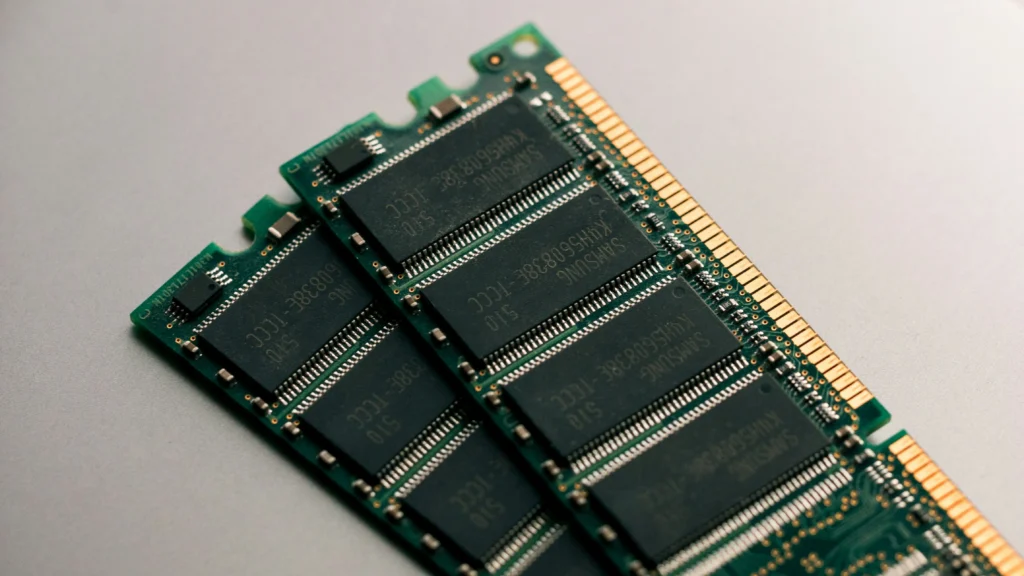
In 2026, the energy efficiency of these memories will also be a key differentiator, allowing heavy tasks to be performed without draining the battery in minutes.
The label on the box can be a trap if you don't check the technical specifications of the technology used in the module.
Relationship between RAM, Processor and Performance
The table below illustrates how different configurations impact actual usage, proving that balance is more important than isolated numbers.
Read more: What to uninstall from your phone now to free up space and improve performance.
| Cell Phone Category | RAM memory | Memory Type | Chipset (Example) | Real Performance |
| Prohibited | 4 GB | LPDDR4 | Snapdragon 4 Gen 2 | Basic / Social Networks |
| Intermediary | 8 GB | LPDDR5 | Dimensity 8300 | Fluid / Multitasking |
| Premium (Optimized) | 8 GB | LPDDR5X | Apple A18 Pro | Excellent / Edition |
| Premium (Gross) | 16 GB | LPDDR5X | Snapdragon 8 Gen 4 | Extreme / Games / AI |
| (Deceptive) Marketing | 12 GB | LPDDR4X | Old Processor | Median / Inst |
When does having a lot of RAM really make a difference?
There are niches, such as competitive gaming and heavy multitasking with AI, where abundant memory ceases to be a luxury and becomes a requirement.
Generative artificial intelligence running locally on the device requires that massive language models be loaded into RAM for instant responses.
Read more: What to do when your phone's memory is always full, even after cleaning?
For those who use their cell phone as a computer, connecting it to external monitors, the extra RAM prevents browser tabs from having to reload every five minutes.
In these professional settings, the phrase Cell phones with more RAM aren't always faster. It still applies, but RAM becomes the fuel needed to keep the engine from stalling.
Without it, even the most powerful processor in the world would be idle, waiting for the data to arrive.
The role of internal storage (UFS) in speed
The speed at which applications open depends directly on the internal storage configuration, which works in direct conjunction with RAM.
Imagine that the RAM is the desk and the storage is the filing cabinet; if the cabinet gets stuck, the desk takes longer to assemble.
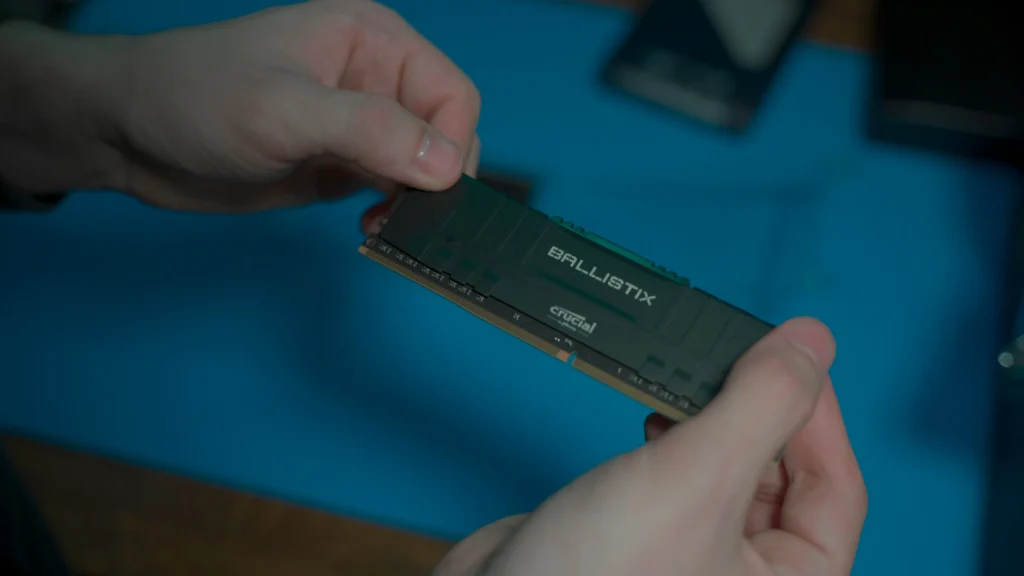
A phone with a lot of RAM but old storage technology (like eMMC) will take ages to load a game or boot up the system.
Read more: How to choose a cell phone that will last until 2030: criteria that really matter.
The ideal balance in 2026 requires that storage (such as UFS 4.0) keeps pace with the speed of RAM.
When buying your next device, check that the reading and writing standards are modern, ensuring that your investment isn't ruined by a slow component hidden in the technical specifications.
To check official specifications and hardware comparisons for almost all global models, the GSMArena It remains the most trusted database in the industry.
FAQ: Frequently Asked Questions
Does virtual RAM really work to make your phone faster?
This is often misinterpreted. Virtual RAM uses internal storage to simulate memory, but since it's much slower than real RAM, it only serves to keep more apps open in the background, not to increase speed.
Will 8 GB of RAM still be enough in 2026?
For the vast majority of people, 8 GB of good quality RAM combined with a modern processor offers a flawless experience. Anything beyond that is only noticeable in professional tasks or high-end games.
Why are phones with more RAM not always faster than iPhones?
It's a matter of architecture. iOS is sculpted for specific hardware, allowing for much more aggressive and efficient resource management than the fragmented Android ecosystem.
Does manually clearing the RAM help?
Actually, it's disruptive. Both Android and iOS are designed to keep RAM occupied (empty memory is wasted memory). Forcing a shutdown only makes the system use more battery power to restart everything from scratch later.
Does having more RAM help with phone durability?
Yes, thinking about the future. Having some extra memory helps the device age better, handling app and system updates that inevitably become more resource-intensive over the years.
