
RISC-V: Why the open chip architecture could change the technology industry.
Advertisements
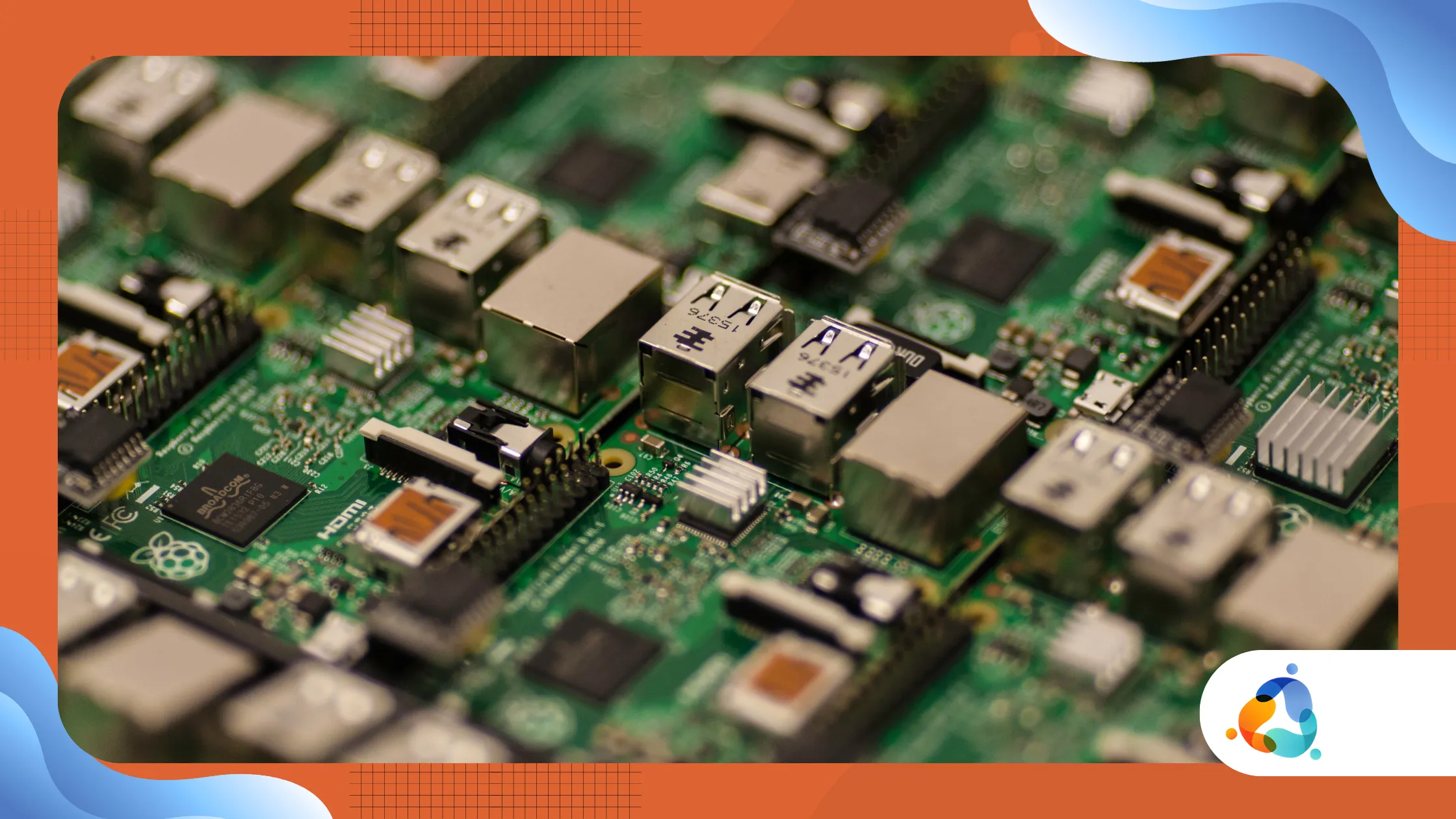
The rise of RISC-V This marks a seismic shift in global hardware, challenging decades of dominance by proprietary architectures in a market increasingly thirsty for digital sovereignty.
THE RISC-V It is an instruction set architecture (ISA) standard based on the principles of reduced instruction set computing, and is completely open and royalty-free.
Unlike Intel or ARM technologies, any company can design, manufacture, and sell chips based on this specification without paying licensing fees or facing contractual restrictions.
Advertisements
This architecture utilizes a modular design, where a basic instruction set can be expanded with customized extensions for specific tasks, such as vector processing or advanced security.
Flexibility allows developers to create processors optimized for unique demands, eliminating the "bloat" of unnecessary functions that typically consume extra power in conventional off-the-shelf chips.
In this article, we will explore the following key points:
- Technical definition and origin of the open standard.
- Competitive advantages compared to x86 and ARM models.
- The geopolitical impact and autonomy of nations.
- Practical applications in AI and Data Centers in 2026.
Why is RISC-V gaining so much traction now?
The growth of RISC-V The projection for 2026 reflects the urgent need for supply chain diversification after years of geopolitical instability and excessive consolidation in the semiconductor sector.
Technology companies are seeking to reduce their dependence on single suppliers to avoid the risk of trade sanctions or arbitrary increases in processing core licensing costs.
Furthermore, energy efficiency has become the primary criterion for edge computing and Internet of Things devices, niches where the simplicity of open design surpasses legacy competitors.
The collaborative nature of the project, maintained by RISC-V International, accelerates global innovation, allowing universities and startups to contribute directly to the evolution of the standard in real time.
What are the competitive advantages over ARM and x86?
While x86 dominates desktops and ARM leads the mobile sector, the RISC-V It offers a third option focused on radical customization and reduced entry costs for new manufacturers.
The open licensing model allows giants like Nvidia, Google, and Meta to develop custom silicon to accelerate Artificial Intelligence workloads without relying on third-party roadmaps.
Read more: What comes after 5G? An analysis of 6G, connectivity, and the future of networks
In technical terms, the absence of historical baggage from decades of outdated instructions makes the RISC-V Cleaner, making it easier to implement security protections directly on the hardware in a transparent way.
This transparency attracts governments concerned about "backdoors" in foreign hardware, solidifying the standard as the preferred choice for critical infrastructure and defense systems that require full auditing.
How will RISC-V impact Artificial Intelligence in 2026?
The explosion of generative AI demands specialized hardware that can efficiently process trillions of parameters, a field where... RISC-V It demonstrates superiority through its dedicated vector extensions.
Many modern AI accelerators now utilize open cores to manage data orchestration, allowing for smoother integration between machine learning software and silicon.
Explore also: How ChatGPT and Gemini are changing personal and professional productivity
The ability to add custom instructions for specific mathematical operations in neural networks gives designers a competitive advantage that closed architectures can hardly keep up with at the same speed.
Currently, we are observing a massive migration of inference clusters to solutions based on the open standard, aiming to reduce the Total Cost of Ownership in large-scale data centers.
To better understand the overall technical specifications, you can consult the official documentation at [website address]. RISC-V International, which coordinates the development of these standards.
Comparative Table: The Processor Landscape in 2026
| Feature | x86 (Intel/AMD) | ARM (SoftBank) | RISC-V (Open) |
| License Template | Closed Owner | Paid Licensing | Free Open Source |
| Personalization | Virtually none | Limited / Expensive | Fully Flexible |
| Energy Efficiency | Average | High | Extremely High (Optimized) |
| Software Ecosystem | Maduro (Legacy) | Very Mature | Expanding Rapidly |
| Main Use | PCs and Servers | Mobile and IoT | AI, IoT and Specialized |
Which countries are leading the adoption of this technology?
China invests billions of dollars in the ecosystem. RISC-V to guarantee its technological independence, aiming to neutralize the impact of export restrictions imposed by Western powers in the recent past.
The European Union also funds supercomputing projects based on this architecture, seeking to strengthen its digital sovereignty and foster a local semiconductor industry less dependent on external technologies.
In Brazil, interest is growing in research centers that see open hardware as an opportunity to develop national solutions for smart agribusiness and low-cost environmental monitoring.
This decentralization of hardware development removes the innovation bottleneck that was previously restricted to Silicon Valley, democratizing access to the creation of high-performance microchips globally.
Conclusion
THE RISC-V It has ceased to be an academic promise and has become the cornerstone of a new industrial era where hardware follows the path to success paved by free software.
The freedom to innovate without permission, coupled with the technical efficiency of architecture, is forcing traditional giants to rethink their business models and market strategies for the coming years.
In 2026, opting for an open architecture is not just an economic decision, but a strategic move for security, customization, and future vision for any serious technology company.
The ultimate impact will be more diverse, accessible, and resilient computing, where the focus returns to solving complex problems through intelligent silicon optimized for reality.
To keep up with the latest news and analysis on the semiconductor and semiconductor market, visit the specialized portal. IEEE Spectrum, a world reference in engineering and technology.
Frequently Asked Questions about RISC-V
Is RISC-V really free?
The instruction set specification is free and open, but the physical implementation (the manufactured chip) can be sold as a commercial product by any company that develops it.
Can it replace my Intel processor?
For general-purpose tasks, x86 still dominates Windows, but for cloud servers and smart devices, the RISC-V It is already a real and efficient alternative today.
Is it safe to use open-source hardware?
Yes, transparency allows security experts to audit the design for vulnerabilities, something impossible to do with black-box processors like ARM or Intel.
Which famous companies use this architecture?
Giants like Google, Western Digital, Alibaba, Nvidia, and several AI startups are already part of these hubs. RISC-V in their products for control or data processing functions.
