
Visa: More than a card, a total people connector.
Advertisements
When people hear the name Visa, most people immediately picture a credit or debit card in their wallet.
It's probably the card they use to buy groceries, take advantage of vacations, or pay for breakfast.
But Visa is much more than a little plastic corner with a logo.
It's the invisible motive behind billions of transactions every day. It's a house that has shaped the way capital circulates in the modern universe.
In essence, Visa is not a bank. It doesn't issue cards, set interest rates, or grant influence.
Technology for everyone
Instead, with the purpose of Visa being a total technology solutions house.
Advertisements
It builds the infrastructure and tools that allow capital to move securely, effectively, and instantly between people and businesses.
>> Card at Santander see here – https://aceitei.com/solicite-seu-emprestimo-no-santander/<
It doesn't matter whether you're swiping a card at a store in Brazil or typing on your phone in Tokyo. But there's a good chance Visa can deliver the quiet intensity that makes this moment possible.
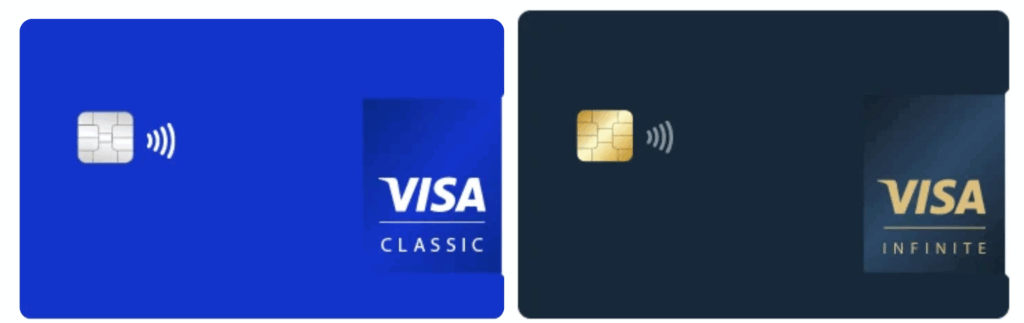
The Visa revolution is so highlighted not just because of the technology it offers. It's because it has become such a natural-seeming part of everyday life.
In an increasingly digital and accelerated world, Visa has remained relevant by adapting, innovating, and never losing sight of its mission: connecting the world through the most secure, reliable, and accessible solutions chain possible.
The Visa Principle
In 1958, when Bank of America began offering its consumer credit card to the middle class, it was a bold move at the time.
Until then, influence cards were mostly offered by wealthy people or individual stores.
But Bank of America had a bigger vision: a card that could exist, used by merchants and industries, free for ordinary people.
The program, originally called "BankAmericard," began in Fresno, California, as a small pilot.
We have a recommendation for you:
Alternative lending options; sometimes there were problems in the beginning: fraud, noise, and operational issues.
But with resistance and innovation, the program gained momentum and, by the early 1970s, was spreading internationally.
In 1976, the registry officially changed its name to Visa. Thus, the idea at the time was humble and simple.
Just as a glance allows one to wander across borders, the Visa card would allow one to wander across financial systems. It was about total tracking and freedom.
How the Visa Works
Understanding what Visa does means understanding what it doesn't do.
Visa also does not lend capital, meaning it does not retain deposits.
Instead, it acts as an intermediary—or, more precisely, as a chain—between four major participants in a trade:
| The Cardholder (you) |
| The merchant (the shop or business) |
| The issuing bank (the bank that gave you the card) |
| The acquiring bank (the bank that works with the merchant) |
| When you use your Visa card, commerce flows through the Visa chain |
| It seeks to verify total security as it verifies the funds. |
| And ensures that life is recorded correctly |
Its chain, known as VisaNet, can unexpectedly trigger more than 65,000 commerce messages per second.
This is more than impressive. It's necessary for a world where people expect transience and security in every purchase.
- All this happens in seconds.
- And Visa does this billions of times every month.
- It is a system that requires extreme credibility and trust. If the Visa network goes down, purchases will not happen.
- This kind of division is not an option.
- That's why Visa invests heavily in security and innovation.
A Global Presence
Today, as a result, Visa operates in more than 200 countries and territories.
But the card's prestige isn't just about numbers, it's about access.
In places where traditional banking services are limited, Visa comes to the aid of people to immerse themselves in the digital economy.
Through partnerships with local governments, NGOs, and financial technology companies, the institution is working to provide financial services to the most marginalized.
Whether providing mobile solution systems in rural Africa or helping small businesses in Southeast Asia.
By taking card payments for the first time, Visa is helping to shape an inclusive financial future.
Innovation across technology, namely, Visa has never stopped, in fact, its future depends on its ability to evolve.
The way people pay is changing rapidly. Gender capital is disappearing.
Cards are going digital.
Cell phones, watches, and even audio assistants are becoming solution tools. Visa is at the forefront of this transformation.
Contactless payments, for example, are now a novelty, and are now available in many parts of the world.
Visa played a key role in representing a range of new developments.
Veiga himself for mobile wallets like Apple Pay and Google Pay, which rely on Visa technology behind the scenes.
More recently, Visa has been exploring how to take synthetic accuracy and engine assimilation to correct fraud detection.
It is also investing in blockchain technology and exploring how cryptocurrencies might one day fit into its chain.
Visa Card Acceptance
The Visa card is one of the most widely accepted worldwide, working in millions of locations in over 200 countries and territories. Whether in physical stores, online, or for withdrawing cash from ATMs,
It's rare to go somewhere and not be accepted by Visa. From large chain stores and restaurants to small businesses and international websites, Visa has a huge presence.
That's why it's one of the most popular cards for those who travel or shop online. It's practically universally accepted, which provides peace of mind!
Visa Infinite
The Visa Infinite card is one of the top flag Visa, designed for those seeking many benefits, especially in travel and premium experiences.
It offers benefits such as access to airport lounges (often unlimited or with several free accesses per year).
Comprehensive travel insurance (for medical emergencies, delayed or lost luggage, flight cancellations) and 24-hour comfort service.
Which is like a personal assistant to help you with restaurant reservations, tickets and itineraries.
Additionally, they usually have very generous points programs, which you can exchange for airline miles or products, and benefits at luxury hotels.
The annual fee is usually higher, but many banks offer a waiver if you have a significant spending or investment volume. It's the ideal card for those who travel a lot and also want comfort and security.
