
Do cell phones with silicon carbon batteries really last longer?
Advertisements
You cell phones with carbon silicon batteries They represent the biggest disruption in hardware engineering since the popularization of lithium-ion technology.
They promise to finally solve the long-standing energy bottleneck in our devices. By 2026, this technology will have gone from being a technical promise from Chinese labs to becoming the gold standard in premium devices seeking minimal thickness and maximum battery life.
What exactly is a silicon-carbon battery?
The silicon-carbon battery replaces the conventional graphite anode with a composite structure that uses nanoscale silicon, a material with vastly superior theoretical storage capacity.
While graphite retains lithium ions to a limited extent, silicon can accommodate a much higher density, resulting in smaller and lighter cells.
Advertisements
There was a persistent problem: pure silicon often expanded physically during charging, causing instability and premature failures.
The modern solution applied in cell phones with carbon silicon batteries It involves a carbon matrix that "envelops" the silicon, controlling its expansion and ensuring complete safety for the user without compromising the structure.
This innovation allows a smartphone to maintain an ultra-thin body, less than 8mm thick, while housing capabilities that previously would have required heavy and uncomfortable devices.
It's the kind of volumetric efficiency that redefines what we expect from a top-of-the-line mobile device in today's landscape.
How does this technology increase the actual battery life of a smartphone?
Autonomy increases not only through the sheer size of the load, but also through intelligent low-voltage power delivery.
Carbon silicon maintains a more stable discharge curve, allowing the phone to function vigorously for longer, even when that final percentage of battery seems to be running low.
When compared to the 2024 models, the new ones cell phones with carbon silicon batteries They deliver up to 20% more hours of active screen time with the same physical volume.
This means that heavy users can make it to the end of the second day without desperately needing to search for an outlet in the middle of the workday.
To understand the scientific basis of this evolution, portals such as IEEE Spectrum They detail how nanotechnology applied to anode materials has overcome the physical limitations of pure graphite in recent decades.
Software optimization, combined with this new chemistry, allows the system to manage processing peaks without aggressively draining the load.
This is a synergy between hardware and artificial intelligence that prioritizes the device's survival in situations of intensive use, such as gaming and high-definition videos.
What are the advantages of ultra-fast charging?
The common fear that high-density batteries charge slowly has been dispelled by the engineering of 2026.
The carbon structure facilitates electrical conductivity, allowing lithium ions to move with less internal resistance, which generates significantly less waste heat during the process.
Currently, it is possible to fully charge 5,500 mAh cells in less than 30 minutes without compromising the chemical integrity of the component.
Read more: How to charge your cell phone correctly and avoid damaging the battery.
This agility transforms the routine, making nighttime charging optional and often completely unnecessary for those with busy lives.
Even under intense loading protocols, heat damage is minimized by the efficiency of the composite anode.
This ensures the energy performance of cell phones with carbon silicon batteries remain consistent for much longer than previous generations of smartphones, which suffered from overheating.
| Reference Model (2026) | Capacity | Device Thickness | Hours of Video (Wi-Fi) |
| Premium Smartphone A | 5,600 mAh | 7.9 mm | Up to 28 hours |
| Premium Smartphone B | 5,400 mAh | 7.5 mm | Up to 26 hours |
| Mid-range Smartphone C | 5,000 mAh | 8.2 mm | Up to 24 hours |
| Standard Model (Graphite) | 4,500 mAh | 8.5 mm | Until 6 PM |
Why is long-term durability superior?
Many consumers question whether high density results in a battery that "wears out" faster. The chemical reality shows the opposite: the carbon matrix protects the silicon against mechanical degradation caused by the repetitive cycles of thermal expansion and contraction that previously destroyed the cells.
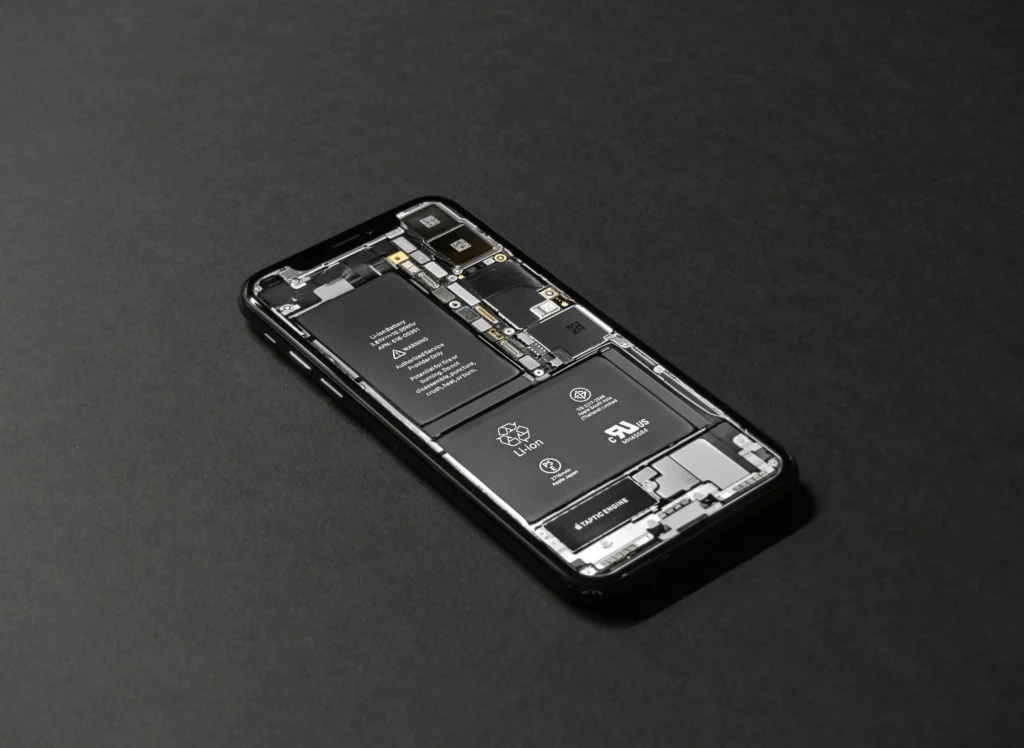
Manufacturers now guarantee that cell phones with carbon silicon batteries 80% retains 80% of its original capacity after 1,600 complete load cycles.
In practical terms, this means about four years of heavy use before noticing any significant drop in the device's battery life.
This longevity is a fundamental pillar for sustainability, reducing the need for premature device replacements and the consequent disposal of electronic waste.
Learn more: How to Increase Your Cell Phone Battery Life Without Installing Apps
Investing in durable technologies has become an ethical and economic priority for brands seeking to build loyalty among increasingly conscious customers.
Chemical stability dramatically reduces the risk of battery swelling, a classic problem in traditional lithium-ion cells.
Safety is enhanced by layers of molecular protection that isolate the active components from any external or internal physical stress.
What is the impact on the design and ergonomics of the devices?
The biggest visual benefit of this technology is the demise of "brick" cell phones that needed excessive thickness to last all day.
Carbon silicon allows for curved and ergonomic designs that fit perfectly in the hand, without any sacrifice in power delivery.
Manufacturers of cell phones with carbon silicon batteries They are now able to integrate complex camera systems and state-of-the-art sensors without expanding the device's chassis.
The space saved by the smaller battery is redirected towards heat dissipation and high-end photographic hardware.
This space saving also benefits the inclusion of more efficient wireless charging coils and audio systems with larger resonance chambers.
The smartphone of 2026 is a marvel of internal efficiency, thanks to this silent yet powerful chemical innovation.
The user notices a device that is noticeably lighter, which reduces fatigue during prolonged use. This lightness, combined with the extended battery life, creates a much smoother experience and reduces dependence on heavy external accessories, such as the ubiquitous power banks of the past.
Is it worth investing in this technology now?
The short answer is yes, especially if you're looking for a device that will last for many years without noticeable degradation.
Learn more: Real benefits of battery saving mode — is it worth activating all the time?
The additional cost of these batteries has already been offset by large-scale production, making them affordable even in premium mid-range models in Brazil.
When choosing cell phones with carbon silicon batteries, By doing so, you are acquiring the pinnacle of current energy efficiency.
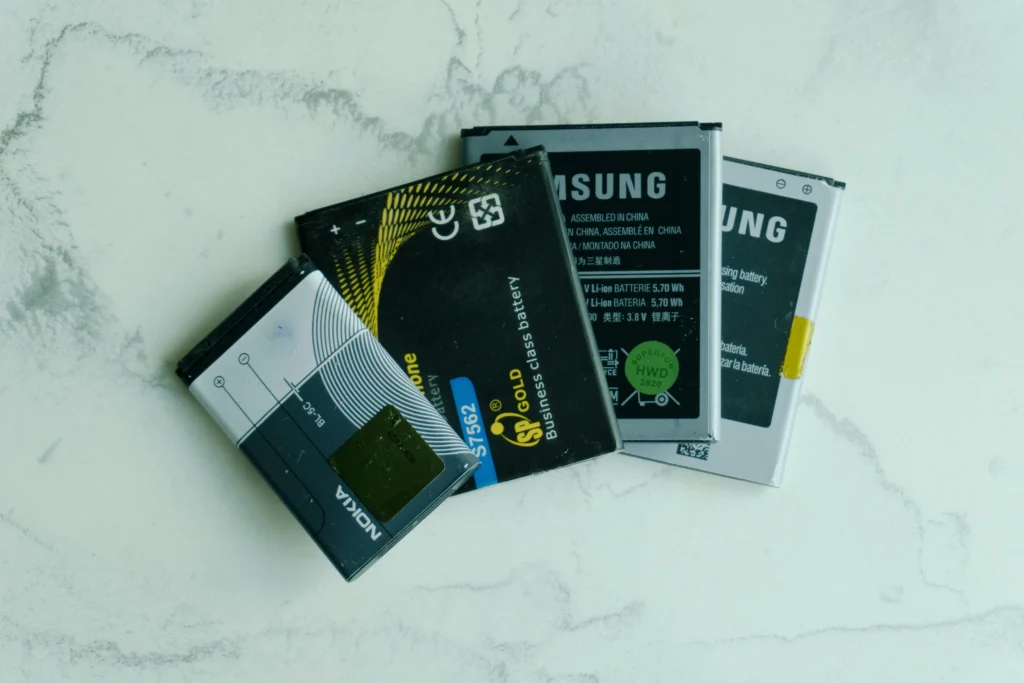
The difference in routine is clear: less concern with percentages and more focus on what you actually do with your mobile device on a daily basis.
To view stress tests and real-time performance analyses of the latest models, visit the portal. GSMArena It offers detailed comparisons that confirm the superiority of these cells in standardized and rigorous laboratory tests.
The trend is that graphite will be completely replaced by silicon compounds in all smartphone categories very soon.
Those who adopt the technology now are simply anticipating a standard that will be mandatory for the competitiveness of the global technology industry.
FAQ (Frequently Asked Questions)
Do cell phones with silicon carbon batteries overheat more?
No. Due to the lower internal resistance of the carbon silicon anode, heat generation during use and charging is often less than in traditional graphite batteries.
Are these batteries explosion-proof?
Yes, they undergo the same rigorous safety tests as conventional lithium batteries. The carbon matrix helps stabilize the material, preventing dangerous thermal reactions even under stress conditions.
Is wireless charging supported?
Absolutely. Carbon silicon technology does not interfere with induction coils. In fact, by allowing for thinner devices, the efficiency of induction charging may be slightly higher in some models.
How can I tell if my phone has this technology?
Manufacturers typically highlight this feature in technical specifications as "Silicon-Carbon Battery." Brands like Honor and Xiaomi were major pioneers in introducing this architecture to the general public.
Does this significantly increase the price of cell phones?
At the beginning of the transition, there was a noticeable difference, but today prices are equalized. Mass production has allowed this technology to become the market standard for most high-performance releases.
