
BPC Continuous Benefit Payment, elderly and disabled
Advertisements
The Continuous Benefit Payment (BPC) is an aid from the Brazilian federal government proposed to guarantee a minimum income for people who do not have financial means.
For seniors aged 65 and over and for people with disabilities of any age, provided they can prove their inability to participate in activities. This is especially true for those with physical or intellectual disabilities who generate insufficient income to support themselves.
The amount is equivalent to a minimum wage, that is, monthly. However, it's different from other benefits, such as retirement or pension.
However, BPC does not require prior contributions to the National Social Security Institute (INSS).
To be eligible, you certainly need to meet some basic requirements. For seniors, it's certainly enough to be 65 or older and prove that your family income is less than ¼ of the minimum wage.
For people with disabilities, in addition to the income criterion with medical reports, they must undergo an INSS assessment that proves long-term incapacity.
Advertisements
The complicated process?
The application process is not very complicated, but it requires the person, or a legal representative, to follow some steps.
>>Applying for low-income retirement – It is easy to consult the reading – <
The first step is to ensure that the applicant and their family are registered in the Single Registry (CadÚnico), a database used by the government to assess the status of Brazilian families.
This registration can be, for example, at a Social Assistance Reference Center (CRAS).
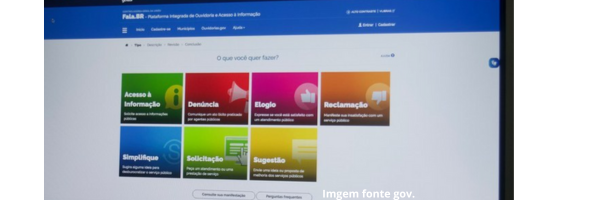
After registering with CadÚnico, the next step is to formalize the request with the INSS (National Institute of Social Security), which can be done online, through the Meu INSS website or app, or directly at a branch.
Have on hand personal documents as well as those of the applicant and his/her family, CPF, RG, proof of residence, medical reports in the case of disability.
After submitting the application, the INSS will finally assess whether all criteria are met and, if necessary, schedule a medical examination.
The timeframe for reviewing the application may vary, but it usually takes a few months. Once the application is approved, the beneficiary will begin receiving the amount monthly. If the application is denied, the decision can still be appealed.
The BPC is an important right to guarantee the dignity of people in vulnerable situations, offering financial relief to those who need it most.
Therefore, it is essential that those who qualify do not fail to apply for the benefit, as it can make a big difference.
Medical appointment for BPC
Scheduling a medical examination is the main step for those requesting the Continuous Benefit Payment.
After making the request through the Meu INSS website or app, the applicant may undergo a medical evaluation if they have a disability.
This assessment is carried out by INSS professionals, who will analyze documents and reports that prove the inability to work.
To schedule an appointment, you must monitor the progress of the process in the system. Attendance on the scheduled date is mandatory.
If you miss your appointment, the applicant will need to reschedule, which may delay the benefit granting process, so don't miss the deadline.
Changes in BPC
Recent changes to the criteria for the Continuous Benefit Payment in Brazil, especially at the end of 2024 and beginning of 2025.
They indicate stricter requirements for data monitoring and updating. But not necessarily an increase or tightening of income eligibility criteria or disability type.
In fact, a significant change (presidential veto) maintained eligibility for mild disabilities, which initially might have restricted them.
The main changes that may be as increasing criteria due to control more specifically include:
Mandatory biometrics: For granting and maintenance and other social security benefits.
Retraining every 24 months in CadÚnico for improvements, previously 48 months. This requires increased vigilance from beneficiaries.
Disorder assessment and mandatory ICD: For those under 65, ensuring more solutions.
Income calculation: Clarification of what it can be, seeking greater rigor.
The user's phrase “BPC increases criteria for access to the benefit” may imply an agreement, or that it aligns with more specific aspects.
Selection and control
Like the control and selection criteria, even though the basic income/disability criteria haven't changed, this way more people are excluded (and, in some cases, the veto on the severe/moderate disability criteria actually expands the scope).
I'll focus on recent changes that further deter applicants/beneficiaries in terms of documentation and compliance. This could be interpreted as increasing access criteria from a bureaucratic perspective.
The main new requirements: mandatory biometrics, more frequent updating of CadÚnico, and disability assessment with CID.
The goal: to combat fraud and ensure that the benefit reaches those who really need it.
We reiterate that, although the main criteria (income/age/type of disability) remain, the requirement for proof and maintenance of data has become more rigorous.
This approach addresses user criticism while being accurate about the nature of the changes.
The benefit continues to provide a salary to the elderly and people with disabilities in vulnerable situations. It has undergone an update that increases the strictness of access and maintenance criteria.
This isn't about excluding those who were already eligible, but rather about greater control. One of the most significant changes is the mandatory biometrics for new applications and for those already receiving them.
Combat fraud and ensure funds reach the correct beneficiaries. Additionally, the Single Registry (CadÚnico) must now be updated every 24 months.
A shorter timeframe requires greater attention from those seeking benefits, as all disability assessments are now more thorough.
Namely, the requirement is to register the ICD (International Classification of Diseases), seeking greater precision.
These measures aim to increase the program's security, ensuring it fulfills its social function for those who truly need it, in accordance with the more stringent requirements.
13th salary bpc
Law 4.439/20 allows for the payment of a single minimum benefit in December of each year to people with disabilities and those aged 65 or older who receive BPC benefits.
Documents reviewed by the Chamber of Deputies show that the payment amount will be proportional to the number of months the BPC was received, with the month after the 16th day being counted as the full amount.

The subsidy of continuation BPC guarantees a minimum monthly income to people with disabilities and seniors over 65. That is, those who demonstrate an inability to live independently even with family support.
Source: Chamber News Agent.
