
Apps to block spam and unwanted calls
Advertisements
The use of apps to block spam and unwanted calls It has become indispensable in modern daily life to stop robotic telemarketing harassment and automated telephone fraud attempts.
The proliferation of predictive dialers and robocalls is turning cell phones into daily targets for abusive calls, harming personal productivity and creating constant risks of social engineering scams.
Given this scenario, call filtering technology has evolved significantly, using community databases and artificial intelligence algorithms to identify unknown callers before answering.
Understanding how these platforms operate, what features they offer, and how to configure them correctly allows you to regain peace of mind when using your smartphone and effectively protect your personal data.
Choosing the ideal tool requires analyzing the accuracy of identification, the level of privacy guaranteed, battery consumption, and compatibility with current mobile operating systems.
What are the main tools for filtering abusive calls?
Blocking platforms combine real-time caller ID with reports generated by millions of users, allowing them to instantly classify suspicious or intrusive numbers.
Advertisements
In addition to redialing known collection and telemarketing numbers, many software programs offer automatic blocking of specific area codes or calls without caller ID on the device.
| Application Name | Main Feature | Identification Mechanism | Compatibility |
| Truecaller | Live ID and SMS blocking | Global community database | Android and iOS |
| Whoscall | Offline search for suspicious numbers and links | Downloadable local database | Android and iOS |
| Hiya | Protection against ID spoofing ($Spoofing$) | Behavioral analysis of cloud networks | Android and iOS |
| Google Phone | Native filtering with visual spam warning. | Artificial intelligence and search history | Android (native) |
Regulations concerning telecommunications services and consumer rights against telemarketing abuses are overseen in Brazil by... Anatel, the government authority in the sector.
Adopt apps to block spam and unwanted calls It drastically reduces the volume of daily interruptions, allowing only legitimate and important contacts to ring the phone.
Many of these solutions offer customizable blocking options, allowing the user to silently reject repetitive calls or send them directly to the system's voicemail.
Constant updating of databases ensures that new numbers used by call centers are detected and neutralized quickly before they cause recurring problems.
Installing filtering tools complements government blocking registries, creating a double layer of protection that shields the user against persistent and fraudulent spammers.
How do intelligent caller ID systems work?
When a call is received, the application instantly queries its servers in the cloud to check the reputation associated with that specific transmitted phone number.
If multiple users have recently flagged that number as fraudulent or a robocall, the system displays a highlighted red alert on the device screen before a response is received.
Behavioral analytics technology identifies anomalous patterns, such as a single number making hundreds of calls per minute, automatically flagging autodialer activity.
Integrating the app with the operating system permissions allows you to silence spam call ringtones without interrupting other priority notifications in the user's routine.
This real-time data processing occurs in fractions of a second, without compromising the performance of the mobile phone's processor or delaying regular service.
What privacy precautions should be taken when installing this software?
Some apps request full access to your contact list to populate their public databases, which requires careful reading of the privacy terms.
Choosing settings that don't share your calendar with third parties protects the personal information of your friends and family from undue exposure online.
Evaluating granted permissions prevents software from accessing unnecessary device resources, such as precise location, microphone, stored photos, or internal system files.
Reputable platforms offer clear options to remove your number from their public search directories, ensuring greater control over your digital footprint and privacy.
Prioritizing established developers with transparent data protection policies minimizes the risk of leaks of sensitive registration information during continuous use.
Official guidelines on digital rights, personal data protection, and information security in the telecommunications environment are maintained by... Cetic.br, a national authority study center.
Use apps to block spam and unwanted calls Consciously strengthen your digital security by combining technological convenience with the rigorous preservation of your personal privacy.
Consumer awareness combined with the use of modern tools reduces the impact of aggressive telemarketing, transforming the mobile experience into something calmer and more productive.
Keeping the app updated through official app stores ensures access to the latest security patches and improvements to the algorithm for identifying suspicious calls in real time.
When is it worthwhile to use the operating system's native tools?
Both Android and iOS have native filtering features that operate without the need to install third-party programs in the device's memory.
In the Android ecosystem, the Google phone app uses aggregated data to identify spam calls and warn the user directly on the call center screen.
Read more: Tips to avoid scams in WhatsApp and SMS messages.
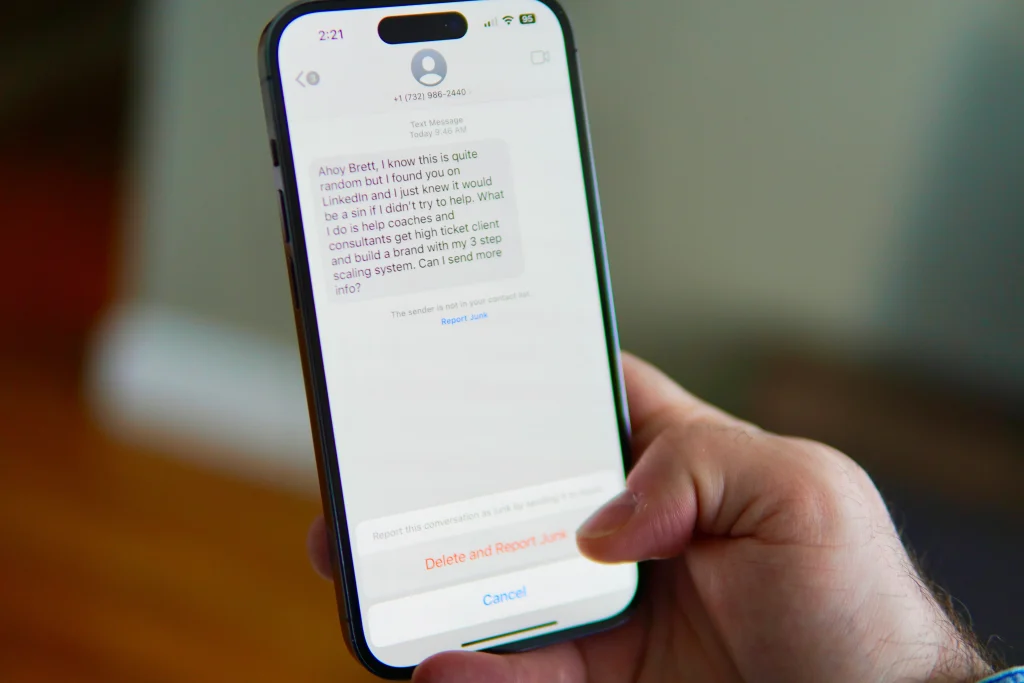
The iPhone offers a feature to silence unknown calls, automatically sending any calls from numbers not saved in the contact list to voicemail.
Using native solutions represents an excellent alternative for those seeking to save RAM and wish to avoid sharing data with external companies.
What additional features make a lock app effective?
The ability to verify links received via text message ($SMS$) expands protection against social engineering scams known technically as $smishing$.
Support for community reporting allows users themselves to help populate the network by reporting new abusive numbers immediately after receiving a call attempt.
Learn more: Unknown calls on WhatsApp: see new information
Automatic scheduling modes allow you to activate hard blocking during work or rest hours, ensuring that interruptions only occur at properly authorized times.
Detailed reports show statistics on how many calls were blocked in the week, visually proving the efficiency of the tool configured on the user's smartphone.
Conclusion
Protecting your smartphone from abusive calls and recurring spammers is an essential measure to preserve your time, productivity, and the security of your personal data.
Combining native solutions with trusted third-party applications ensures an effective barrier against robocalls, electronic fraud, and invasive sales approaches in your daily life.
Read more: WhatsApp groups in common: how to identify strangers
Taking control of phone notifications restores the usefulness of your cell phone, allowing you to answer only genuine, desired, and truly important calls.
Frequently Asked Questions (FAQ)
Do lock apps work when the phone is offline?
Applications that download the database locally can identify offline numbers, while those that rely exclusively on cloud queries require an active connection.
Does silencing unknown calls on my iPhone prevent me from receiving important calls?
Yes, if the number is not saved in your contacts or email history, the call will be muted and sent directly to voicemail.
Does registering with "Do Not Disturb" replace the use of blocking apps?
Registration prevents calls from companies participating in the agreement, but the apps remain necessary to block scams, scammers, and companies that violate the rules.
