
The end of internet cafes: why were they so popular?
Advertisements
Analyze the end of internet cafes This allows us to understand the profound transformation of digital inclusion and electronic entertainment in Brazil between the 2000s and 2020s.
These commercial establishments represented the main gateway to high-speed internet and local network gaming (LAN) for millions of Brazilians at a time when computers and home internet connections were prohibitively expensive.
What were internet cafes and why did they become a social phenomenon in Brazil?
Local chain stores emerged as spaces equipped with dozens of computers interconnected by high-speed cables, offering internet access charged by the hour for individual use.
The scarcity of residential dial-up lines and the high cost of broadband connections have transformed these locations into community meeting points for students, workers, and video game enthusiasts.
Advertisements
Legendary games like Counter-Strike 1.6, Ragnarök Online and Defense of the Ancients (DotA) boosted early morning night owls, in which young people paid discounted rates to compete in person with friends throughout the night.
Understanding end of internet cafes It is important to acknowledge that its popularity stemmed not only from the availability of advanced hardware, but also from the strong sense of community belonging and face-to-face socialization it provided to its attendees.
Beyond digital entertainment, these establishments played a fundamental role in social inclusion, enabling access to digital public services, typing of academic papers, and creation of email accounts.
What technological and economic factors caused the accelerated decline of these establishments?
The consolidation of smart mobile telephony and the expansion of residential fiber optic networks have significantly reduced the cost of continuous connectivity, transferring data consumption directly to the citizen's pocket.
The drop in prices of personal computers and the emergence of affordable smartphones have allowed daily tasks and multiplayer games to be performed comfortably at home or anywhere with a wireless network.
The table below presents the evolution of real indicators for the telecommunications sector in Brazil, highlighting the structural changes that accelerated the gradual closure of these companies over the years:
| Connectivity/Technology Indicator | Peak Scenario (2006) | Transition Scenario (2015) | Consolidated Scenario (2026) |
| Internet Access in Homes | Only 14.5% of Brazilian households | Approximately 58% of Brazilian households | More than 85% with Fixed Broadband |
| Mobile Phone Lines (Smartphones) | 99.9 million active lines | 257.8 million mobile connections | Massive expanded 4G/5G coverage |
| Primary Means of Access to Games | Computers on local networks (LAN) | Home PCs and Consoles | Mobile Devices and Cloud (Cloud) |
| Exclusive Digital Inclusion Fee | Highly dependent on local commerce. | Transition to proprietary mobile networks | Individualized access via mobile phone |
Analyzing this technological transition highlights how the democratization of mobile networks and portable devices has eliminated the practical need for physical travel to access basic internet services.
How have digital inclusion and broadband expansion changed consumer habits?
The lower cost of data plans and the ease of use of apps have transformed smartphones into the main tools for work, study, and leisure for the low-income population in the country.
Video game arcades that have not diversified their services to include technical assistance, peripheral sales, or dedicated spaces. gaming arena High-performance companies have closed their doors irreversibly.
To consult official statistics on the use of information and communication technologies in Brazilian households, access the portal of Cetic.br – Regional Center for Studies on the Development of the Information Society.
Understand the end of internet cafes It involves observing that digital inclusion has ceased to be a community-based and geographical issue, becoming instead a strictly individual, portable, continuous, and instantaneous experience.
State support and social inclusion programs have shifted from offering physical community locations to the full digitalization of government platforms accessible directly via mobile browsers and dedicated applications.
What remains of this business model and how has it reinvented itself in the esports era?
The remaining establishments have abandoned the traditional model of charging by the hour for basic internet access, transforming themselves into esports arenas with state-of-the-art equipment and ergonomic chairs.
These modern spaces cater to content creators, professional gamers, and amateur competitors seeking high-performance graphics cards and high refresh rate monitors that are inaccessible to the average consumer.
Read more: 8 Benefits of Using Antivirus on Your Computer
In outlying areas and peripheral regions, some establishments survived by converting themselves into graphic services centers, stationery stores, cell phone repair shops, and support points for printing official documents.
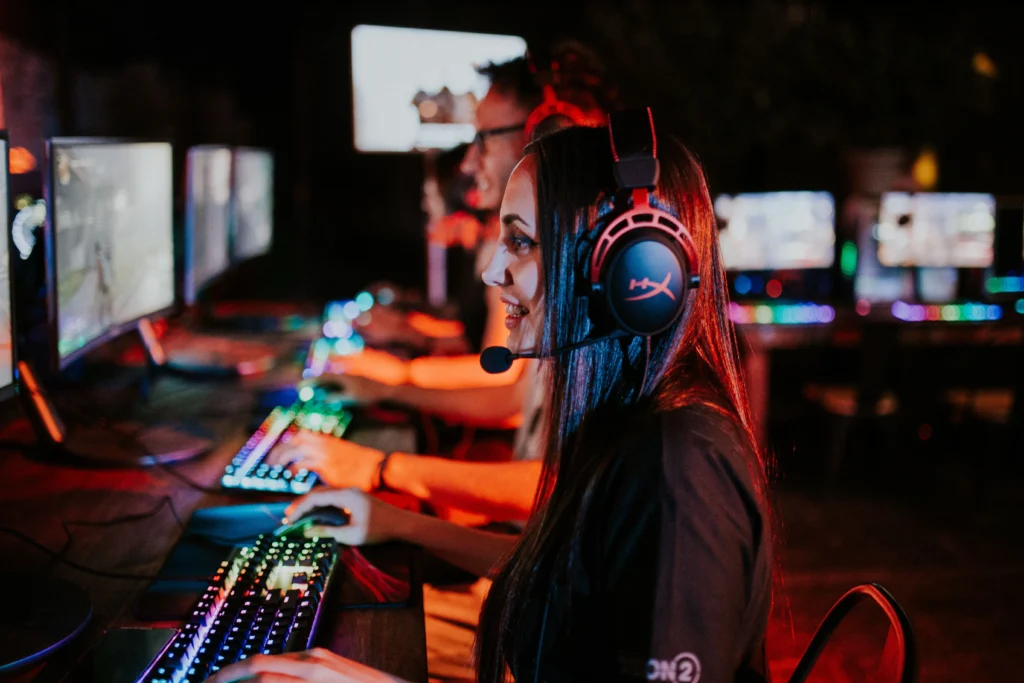
The nostalgia associated with in-person gatherings has also spurred the emergence of themed bars and cultural centers focused on retro gaming and tabletop games, reviving physical interaction among enthusiasts in the sector.
Innovations in the cloud gaming market (cloud gamingThey continue to reduce the need for powerful home hardware, consolidating user autonomy and diversifying forms of digital entertainment.
Where can I find official data and reports on the telecommunications market in Brazil?
Government agencies and research institutions continuously monitor network infrastructure, consumer behavior, and the evolution of communication services nationwide, providing transparent data.
Annual reports show the steady increase in access to fiber optics, the reduction in the price per megabit transmitted, and the socioeconomic impact of connectivity on the productivity of Brazilian workers.
Learn more: The Future of Computers: Will Traditional PCs Disappear?
To examine regulatory data, mobile coverage reports, and statistics for the telecommunications sector in Brazil, visit the portal of... National Telecommunications Agency (Anatel).
Monitoring these historical metrics allows us to understand why... end of internet cafes It represents a natural chapter in technological advancement and the democratization of access to global networks.
The transformation of this sector illustrates the speed at which technical innovations redefine cultural habits, urban infrastructures, and digital business models over just a few decades of constant evolution.
The unforgettable legacy of the local network era in Brazilian digital culture.
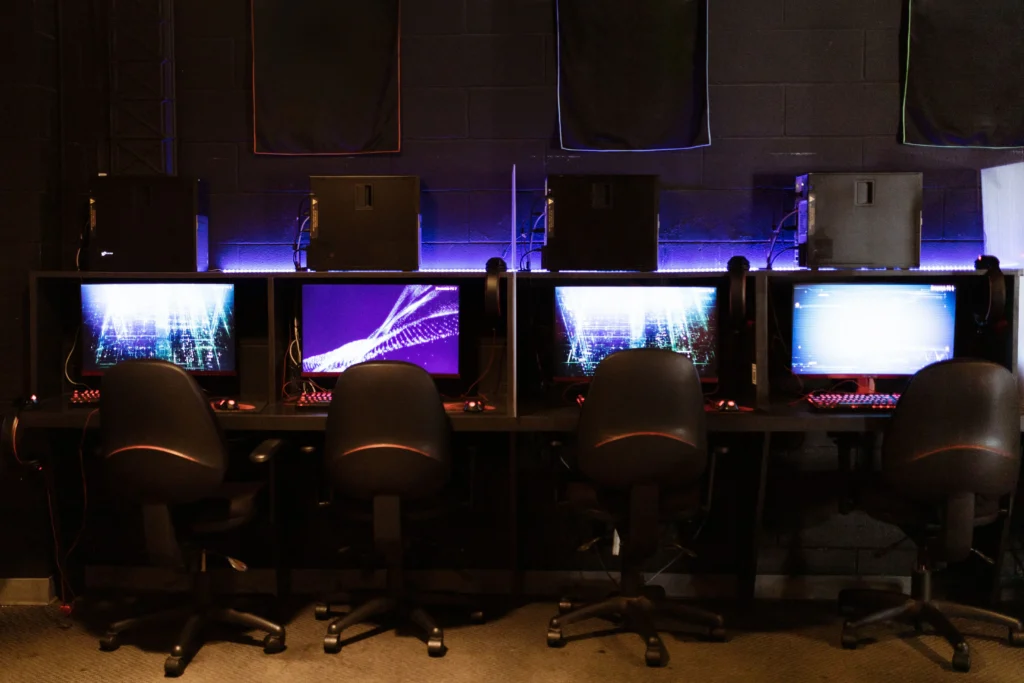
Although noisy classrooms filled with CRT monitors have disappeared from most Brazilian cities, their cultural impact on the formation of the first hyper-connected generation remains incalculable.
The journey that led to end of internet cafes This marks the transition from a Brazil that sought basic access to a society fully integrated into the global digital and connected economy.
Read more: Anonymous Browsing: How Does It Work and Why Is It Important?
Preserving the memory of this period acknowledges the fundamental role these small business owners played in democratizing technology and building the gaming community that drives today's market.
FAQ (Frequently Asked Questions)
Are there still internet cafes operating in Brazil today?
Yes, but in drastically reduced numbers. Most operate as gaming arenas focused on eSports with high-performance computers or as graphic design and printing service centers in outlying neighborhoods.
Which game was responsible for popularizing LAN houses in Brazil?
The first-person shooter game Counter-Strike (especially version 1.6) was the great catalyst for the movement, bringing together groups of friends for competitive matches on a local network.
Why were smartphones the deciding factor in the closure of these establishments?
Smartphones have made internet and gaming access cheaper, allowing users to browse social media, communicate, and have fun from anywhere without paying by the hour.
Did internet cafes receive government incentives to promote digital inclusion?
Although laws such as the Marco Civil da Internet (Brazilian Internet Bill of Rights) and the Lan House Law (Law 12.965/2014) have emerged to recognize their social role, the vast majority operated as private initiatives without direct subsidies.
