
Eradication of Child Labor and Young Apprentices
Advertisements
The government's goal is to ban this type of activity. The Child Labor Eradication Program (PETI) is to offer a better life for children.
Child labor, when carried out inappropriately, actually prevents the full development of these children, depriving them of access to education, health and leisure.
In the link above we have a page that portrays the importance of Young Apprentice to be learning a trade, and several opportunities offered, enjoy reading.
Furthermore, the Menor Aprendiz program helps develop responsibility and discipline, allowing young people to learn how to balance studies and work. Many, after completing the program, end up being hired by companies. It's an excellent way to start a career with support and guidance.
PETI aims to change this reality by offering alternatives that enable healthy growth and the formation of a promising future.
Launched in mid-1996, the program seeks the protection and social inclusion of children and adolescents who are then in vulnerable situations.
Advertisements
It mainly serves those who live in areas of social risk, such as poorer regions or regions with high levels of violence.
PETI offers a range of benefits, including access to educational, cultural, and sports activities, as well as financial assistance. First, it provides families with financial assistance in exchange for eliminating child labor.
One of PETI's main goals is to reduce the number of children and adolescents forced into early labor, often in dangerous and unhealthy conditions.
This includes work on the streets, in factories, and even in the fields, where minors do not have adequate protection conditions.
Furthermore, the program seeks to combat the most severe forms of exploitation, such as child domestic labor and forced labor. This is why it is sometimes invisible and difficult to monitor.
Partnership with states and municipalities
Another important point of PETI, however, is the partnership with municipalities and states to ensure the effectiveness of the program.
It relies on the collaboration of various spheres of public power, such as the Ministry of Labor, the Ministry of Education and Social Assistance.
Each of these sectors plays an essential role in ensuring that children can attend schools and activities that promote their empowerment and citizenship.
With PETI's support, many children and young people were able to escape marginalization and seek a quality education, thus earning the right to a dignified childhood.
Although the program has faced challenges over the years, such as funding and expansion to all regions, its impact on Brazilian society is undeniable.
The eradication of child labor is a fundamental step towards building a more just and egalitarian society.
Ending child labor requires the help of others who experience these acts. If you don't know where child labor occurs in your city, you won't be able to solve the problem.
This process of understanding reality includes community diagnosis, awareness raising, mobilization, and training on the topic.
Thus, in some cases, concrete efforts are made by the Social Assistance Supervisory Board to develop collective strategies.
Identify search work
Identification occurs primarily through active searches and relies on technical teams from government social assistance departments, particularly the Center's specialized social outreach services or additional groups formed for this purpose.
However, this research should also involve other officials and civil society, including care counselors, health authorities, teachers, trade unions, etc. characteristics.
Therefore, it's important to remember that in traditional societies, areas dominated by family farming, or family households, children sometimes perform household tasks requiring a special approach.
Prevention of Child Labor
The proposed restructuring of the PETI is based on an assessment of the new structure for the eradication of child labor in Brazil, as identified in the IBGE census, as well as the structural progress of child labor prevention and elimination policies.
Family culture principles contribute to the emergence of this type of work. However, this situation must be overcome and cultural factors must also be respected.
When a case of child labor is identified, local leaders must register families and children and/or youth in the general registry, citing the specific areas of child labor, as indicated.
The census revealed a decline in child labor in the formal sector as a result of progress in testing.
Therefore, the main cases of child labor today occur in the informal sector, such as family production and domestic work, as well as in family farming and illegal activities.
The goal is to identify children and young people involved in these activities and involve them in social assistance networks and other public policies.
The reformulation of PETI strengthens the leadership and coordination role of protection networks through strategic initiatives to combat child labor.
They also offer co-financing opportunities to local and state governments to develop these initiatives, as discussed later in this text. Strategic behavior ultimately consists of five areas.
1st-Inform and mobilize
2nd-Recognize
3°- Protection
4th- Responsibility
Eradication of child labor
Eradication means combating child labor; joint action between the government, families, and society is certainly essential.
Therefore, the first step is to ensure that all children have access to quality education. This means ensuring schools are close to where they live, with qualified teachers and adequate materials, so that children prefer studying to working.
Furthermore, it's important to strengthen financial support programs for the most vulnerable families. Children often end up working because their families face economic hardship.
THE financial aid can alleviate this pressure and help in the same way to keep children in school, which is the goal.
Laws prohibiting child labor must be strict. This includes enforcement in sectors such as agriculture, commerce, and industry, where child labor is most common.
It is also important to combat exploitation in situations such as domestic work and child prostitution, through awareness campaigns and support for victims.
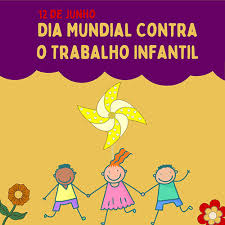
Society as a whole must engage in this fight, denouncing situations of child labor and supporting social inclusion programs.
Only with everyone's participation will we be able to guarantee a better future for children, with education and opportunities, not exploitation.
